
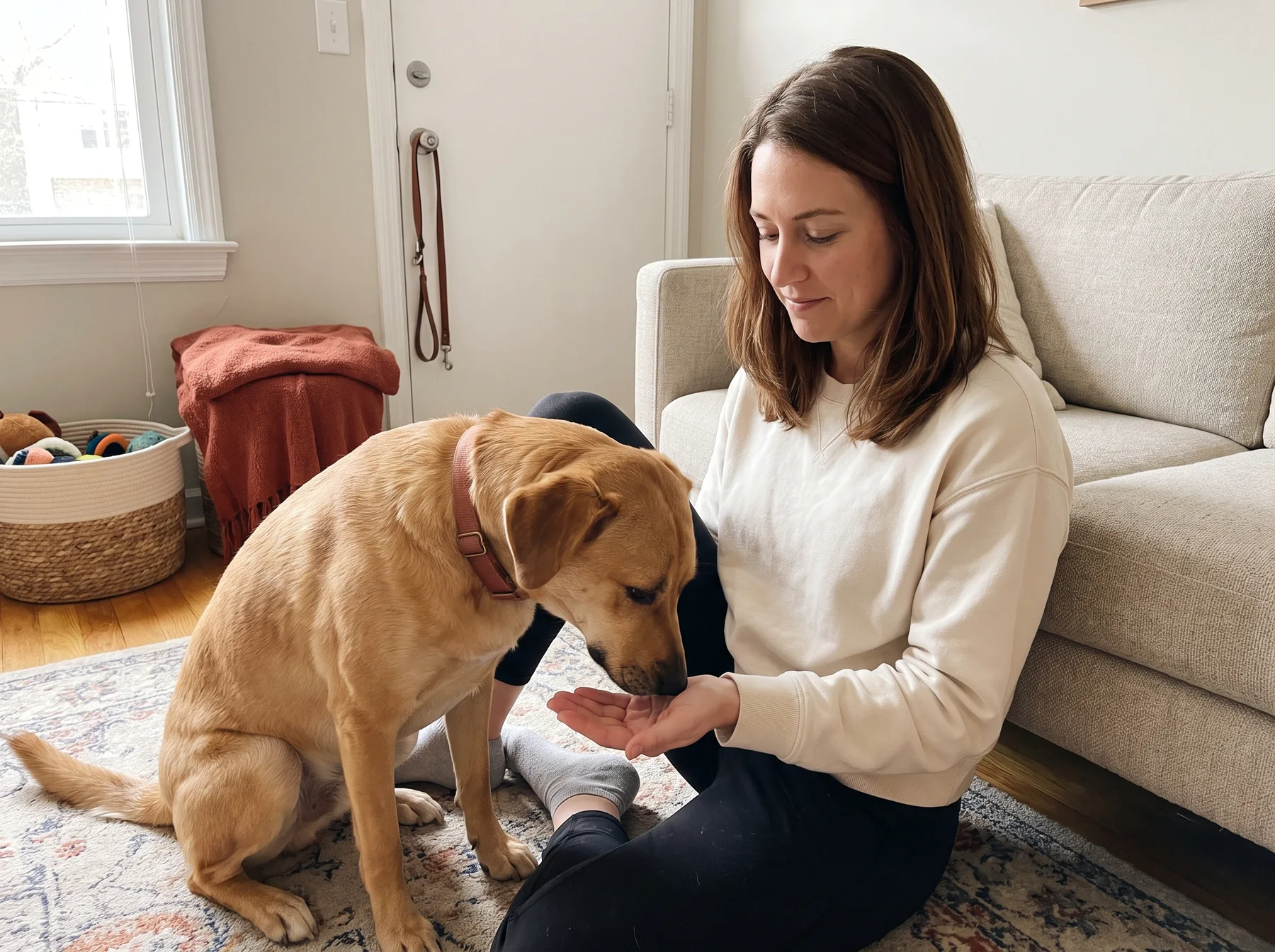
A rescue dog adoption can bring excitement, worry, and a long list of questions. Should your new dog meet everyone right away? What if they will not eat, sleep, walk, or come out of hiding? How soon should training begin?
The safest goal for the first month is not to reveal your dog's full personality or teach every household rule. It is to create a predictable environment where the dog can rest, learn the routine, and begin trusting the people around them. This guide explains how to prepare, what to do week by week, and which changes deserve professional attention.
Why the first month can feel unpredictable
Moving into a new home is a major change, even if the new home is comfortable and loving. A rescue dog may be adjusting to unfamiliar people, smells, surfaces, noises, schedules, and expectations all at once. Shelter life, foster care, transport, previous homes, and an unknown history can also affect how the dog responds.
Some dogs explore immediately. Others hide, pace, sleep heavily, follow one person constantly, or seem unusually quiet. A dog who appears calm during the first few days may become more active or vocal as they settle in. None of these patterns, by itself, reveals what the dog will be like long term.
You may hear about a “3-3-3 rule” for rescue dogs. It is better treated as a loose reminder that adjustment takes time, not as a behavioral deadline. Dogs do not reliably settle in three days, three weeks, or three months. Age, health, temperament, past experiences, and the new environment all affect the pace.
Factors that should shape your rescue dog adoption plan
A general plan becomes safer when you adapt it to the individual dog and household.
The dog's age and health
Puppies need frequent potty trips, careful socialization, and protection based on their vaccination status. Adolescent dogs may need more movement and structured outlets. Senior dogs may need shorter walks, softer resting surfaces, better traction, and veterinary evaluation for pain or sensory changes.
Ask the shelter or rescue for medical records, vaccination dates, medication instructions, microchip details, known allergies, and feeding information. Arrange a veterinary visit based on the organization's guidance and your dog's health needs. Contact a veterinarian sooner if the dog appears ill or has a medication issue.
Known history and behavior notes
A foster home's observations can be useful, but behavior may change in a new setting. Ask specific questions:
- Where did the dog sleep?
- Were they comfortable being left alone?
- How did they signal a need to go outside?
- Did they live with children, dogs, cats, or other animals?
- What equipment did they use on walks?
- Were there known fears, escape attempts, guarding behaviors, or handling sensitivities?
Treat unknown history as unknown. It does not mean something bad happened, but it does mean introductions and handling should be gradual.
Household members and other animals
Young children, older adults, visitors, and people with limited mobility may change how you manage doors, gates, feeding areas, and greetings. Every dog should have a resting area where people leave them alone.
Other pets need separate resources and controlled introductions. Do not assume a positive shelter dog test guarantees compatibility at home. Cats, small pets, and resident dogs can behave differently on their own territory.
Housing and daily schedule
Apartment hallways, elevators, shared yards, and busy sidewalks can make potty trips more stimulating. Renters should confirm pet policies, size restrictions, and local licensing requirements. Consider who will provide care during work hours and how long the dog can currently remain comfortable alone.
Prepare the home before arrival
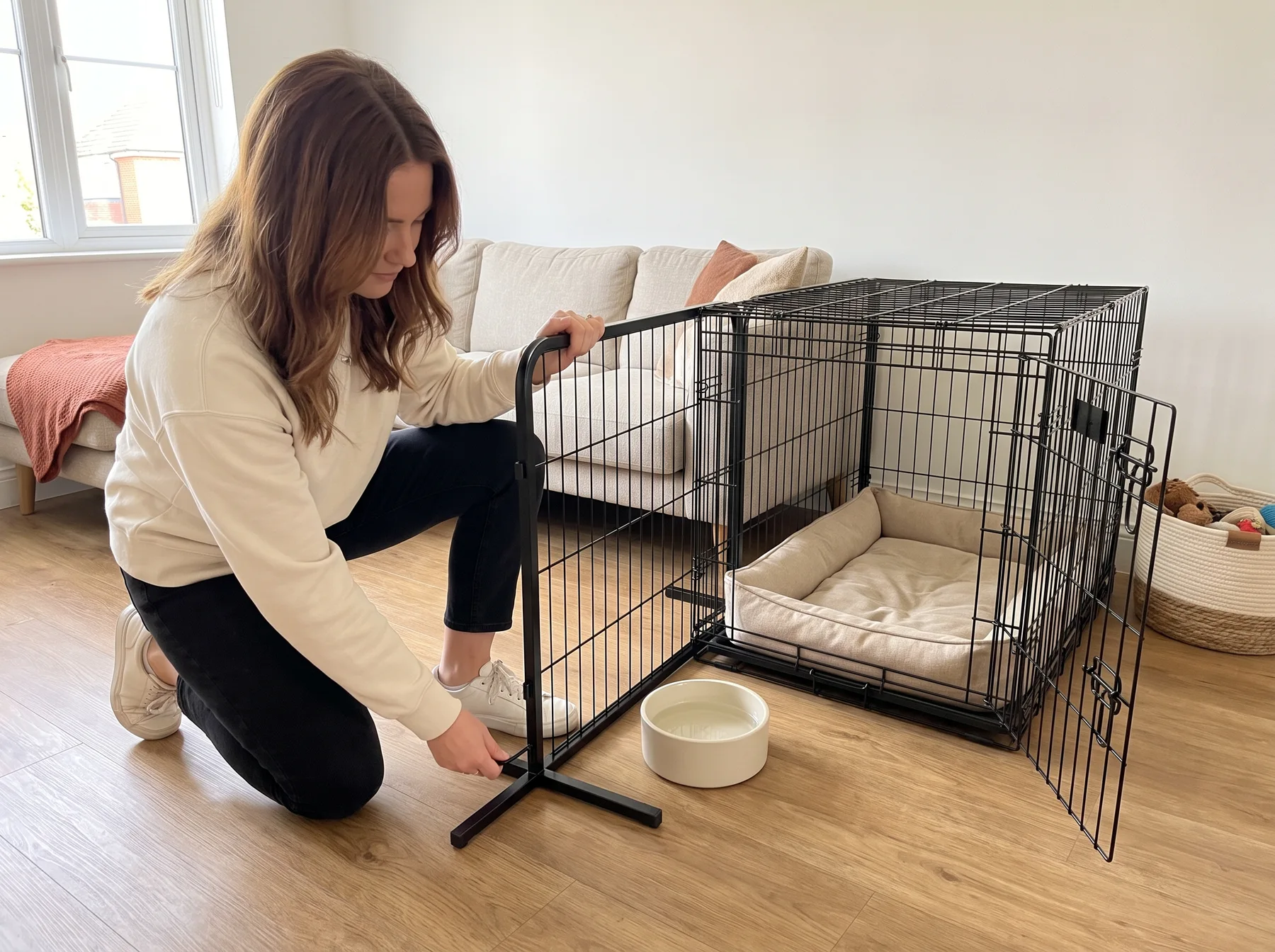
Limit the dog's initial access to a quiet, easy-to-manage part of the home. Too much freedom can make supervision, potty training, and safe rest more difficult.
Set up:
- A bed or washable resting surface
- Water in a stable bowl
- The food the dog is already eating, if available
- A secure leash, identification tag, and properly fitted harness or collar
- Gates or closed doors to block unsafe areas
- Enzyme cleaner for accidents
- A few simple toys and safe chews appropriate for the dog's size
- A quiet confinement or rest area
A crate is optional. Some dogs already find crates comfortable, while others become distressed when confined. If you choose a folding wire dog crate, select a size that allows the dog to stand, turn around, and lie down comfortably. Introduce it with the door open and never use it as punishment.
A gated room may work better for a dog who dislikes a crate. An indoor dog playpen can also create a managed area for some puppies or small dogs. Check its height, stability, dimensions, and compatibility with your flooring. A pen is not secure enough for every dog, especially climbers or jumpers.
Remove medications, cleaning supplies, food, cords, trash, toxic plants, and swallowable objects. Check fences for gaps and confirm that exterior doors and windows latch securely.
A calm first-month rescue dog adoption plan
This timeline provides structure without turning adjustment into a test. Move more slowly when your dog shows avoidance, agitation, exhaustion, or difficulty eating and sleeping.
Arrival day: Keep the world small
Bring the dog directly home rather than stopping at pet stores, parks, or relatives' houses. Give them a quiet opportunity to toilet, then show them the water, resting area, and one or two accessible rooms.
Keep voices low and movements unhurried. Household members can sit nearby without reaching over the dog or insisting on contact. Let the dog approach when possible. Avoid hugging, crowding, leaning over, or repeatedly calling them.
Offer the familiar food at the expected mealtime. A skipped meal can occur during a stressful transition, but refusal to eat can also have medical causes. Puppies, very small dogs, dogs with health conditions, and dogs refusing both food and water need quicker veterinary guidance.
For the first night, place the dog's sleeping area somewhere quiet but not isolated from all human activity. A dim light or nearby sleeping person may help some dogs. Expect possible pacing, whining, or potty needs. Respond calmly rather than treating the behavior as disobedience.
Days 1 to 3: Prioritize decompression
Keep the schedule simple:
- Take the dog to the same potty area after waking, after meals, after active periods, and before bed.
- Feed at predictable times.
- Offer long rest periods.
- Use short, quiet walks if the dog is comfortable outside.
- Limit visitors and avoid busy outings.
- Supervise access to the home.
Do not test the dog by taking away food, touching them while they eat, or exposing them to known fears. Observe body language instead. Turning away, lip licking, freezing, crouching, a tucked tail, hiding, refusing treats, or trying to leave can indicate discomfort.
If your dog struggles to toilet, use a consistent location and give them quiet time rather than extending the trip into an overwhelming walk. The guide to a first-week potty routine for a rescue dog offers more troubleshooting steps.
Days 4 to 7: Build predictable patterns
Continue protecting rest while beginning small routines. Use the dog's name before pleasant events, reward outdoor toileting, and reinforce choices you want repeated, such as looking at you, settling on a bed, or keeping four paws on the floor.
Training sessions can be 30 seconds to two minutes. The point is communication, not performance. If the dog will not take food, the environment may be too stressful or distracting. Move farther from the trigger, return indoors, or try later. Use this stress and distraction check for dogs who will not take treats outside before assuming the dog dislikes rewards.
Begin brief departures only if the dog is settling comfortably. Step behind a gate or leave the room for a few seconds, then return before distress escalates. Increase time gradually. Recording the dog while you step outside can reveal pacing, barking, escape attempts, or an inability to settle.
Week 2: Expand carefully
If the dog is eating, resting, toileting, and recovering well after routine events, you can gradually add experiences. That might mean one calm visitor, a slightly longer sniffing walk, access to another room, or a short ride to a quiet location.
Introduce one variable at a time. If the dog is overwhelmed, you will know which change may have contributed.
For family greetings, keep the dog free to move away. Ask people to turn slightly sideways, avoid direct staring, and let the dog initiate contact. Children should never climb on, corner, chase, or disturb a sleeping or eating dog. Use gates and active adult supervision rather than expecting either the child or dog to manage the interaction.
Resident dogs should meet with space and attentive adult handling. Start outdoors or in a neutral, low-traffic area when practical. Use separate feeding stations, beds, toys, and rest periods. Interrupt tense interactions by calmly creating distance, not by reaching between dogs.
Weeks 3 and 4: Strengthen daily-life skills
By this stage, some dogs begin showing more energy, curiosity, barking, chewing, or frustration. This does not necessarily mean they are getting worse. They may simply feel safe enough to behave more naturally.
Focus on skills that support daily life:
- Responding to their name
- Following a treat or hand target
- Settling behind a gate or on a mat
- Trading an object for food instead of having it pulled away
- Waiting briefly while a leash is attached
- Returning indoors from the yard
- Tolerating very short, gentle handling with consent
Keep walks suited to the dog's age, health, and comfort. Sniffing in a quiet area may be more useful than covering a long distance. Before increasing walks, complete a seven-point harness fit check.
Add low-pressure enrichment rather than relying only on physical exercise. Scatter part of a meal on a clean floor, hide food in an easy cardboard setup under supervision, or try a beginner find it game for newly adopted dogs. Stop if the activity causes frustration, guarding, or unsafe chewing.
How to tell whether the plan is working
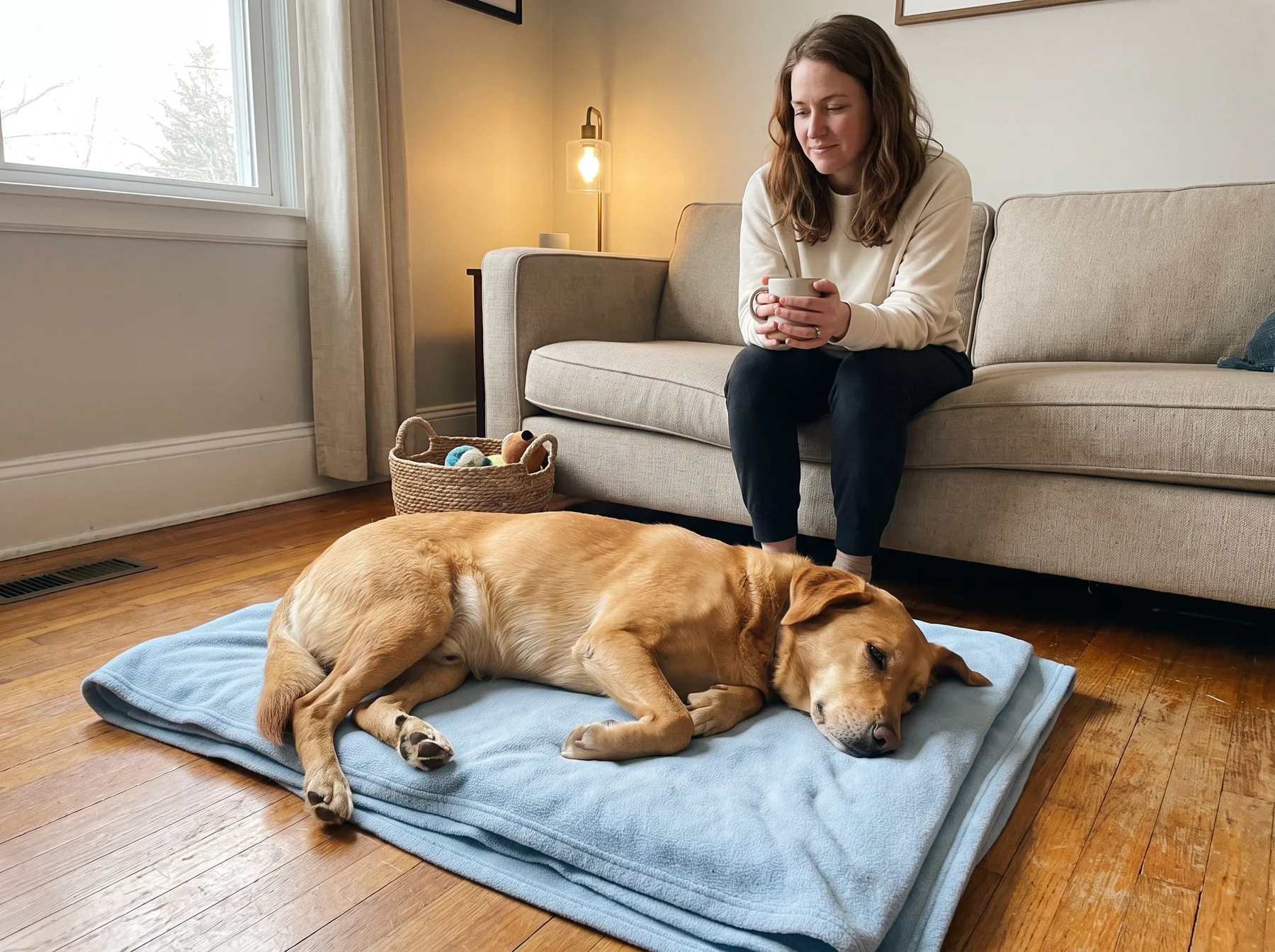
Progress often appears in small changes rather than a dramatic transformation. Useful signs include:
- The dog rests more deeply or chooses comfortable sleeping positions.
- Eating and toileting become more predictable.
- The dog explores without constant pacing.
- They recover more quickly after a noise or unfamiliar event.
- They voluntarily approach household members.
- They can disengage from mild distractions.
- Their body appears looser during familiar routines.
Progress is rarely linear. A difficult day after a visitor, veterinary appointment, storm, or schedule change does not erase previous gains. Reduce demands and return to the last routine the dog handled comfortably.
Common mistakes that can make adjustment harder
Scheduling too many introductions
Friends and relatives may be eager to visit, but repeated greetings can prevent a dog from resting. Delay optional visits, then keep early meetings brief and low pressure.
Giving full access to the home
Freedom is safest when added gradually. Closed doors, gates, leashes used under supervision, and designated rest areas can prevent chewing, accidents, pet conflict, and rehearsed chasing.
Correcting fear or warning signals
Growling, retreating, and freezing communicate discomfort. Punishing these signals can increase fear and remove useful warnings without resolving the cause. Create distance and note what happened immediately before the behavior.
Forcing walks or affection
A dog who stops, backs away, or refuses food may be overwhelmed. Do not drag them toward a person or frightening location. Use shorter outings, quieter times, and more distance. Medical pain should also be considered when movement or touch causes sudden concern.
Changing food abruptly
A sudden diet change can contribute to digestive upset. Continue the familiar food when possible, then ask your veterinarian how to transition if a change is needed. Avoid adding many new treats, chews, and supplements at once.
Expecting immediate obedience
A dog cannot respond reliably to cues they have not learned in the new environment. Reinforce desired behavior, prevent unsafe choices, and practice in easy settings before adding distractions.
When to contact a veterinarian or behavior professional
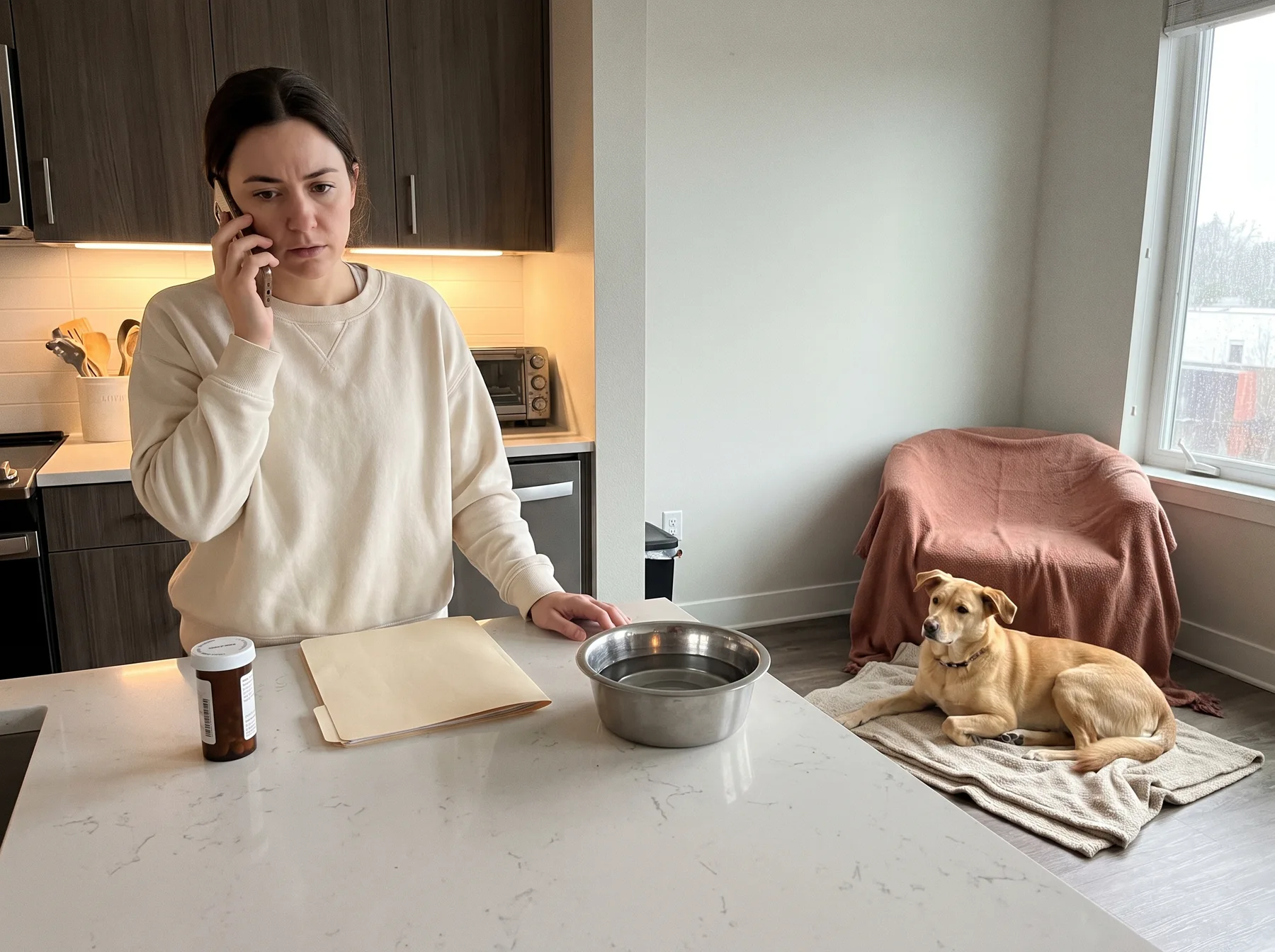
Contact a veterinarian promptly for breathing difficulty, collapse, repeated vomiting, a swollen abdomen, suspected toxin exposure, serious injury, inability to urinate, severe lethargy, or other signs of an emergency. Use an emergency clinic when your regular veterinarian is unavailable.
Veterinary advice is also appropriate for persistent diarrhea, coughing, limping, significant itching, pain, marked changes in thirst or urination, or ongoing appetite concerns. Ask sooner for puppies, seniors, very small dogs, and dogs with known medical conditions.
Seek help from a qualified reward-based trainer or behavior professional when you see:
- Repeated lunging, snapping, or biting
- Guarding that makes normal household movement unsafe
- Panic during departures or confinement
- Persistent inability to settle or sleep
- Intense fear that interferes with eating, toileting, or leaving the house
- Conflict between household pets
- Chasing or fixation that puts children, cats, or small animals at risk
- Behavior that is escalating despite increased distance and careful management
A veterinarian can check for pain or illness that may contribute to behavior changes. For serious aggression, severe fear, or separation-related distress, look for a credentialed behavior consultant, a certified applied animal behaviorist, or a board-certified veterinary behaviorist. Avoid professionals who rely on intimidation, forced exposure, pain, or claims about dominance.
First-month checklist
Before arrival:
- Confirm medical, feeding, microchip, and medication information.
- Prepare a quiet rest area and secure exterior exits.
- Choose properly fitted walking equipment.
- Remove household hazards and separate pet resources.
- Decide who handles feeding, potty trips, and supervision.
During the first week:
- Keep meals, rest, and potty trips predictable.
- Limit visitors and stimulating outings.
- Observe body language without testing tolerance.
- Begin only short, reward-based training.
- Arrange veterinary care as appropriate.
By the end of the month:
- Review eating, sleep, toileting, comfort, and recovery from stress.
- Expand access and activities only when the dog is coping well.
- Continue gradual alone-time practice.
- Identify behaviors that need professional support.
- Update the routine as you learn what helps your dog feel secure.

Join the conversation
0 comments
Leave a comment
Your email address will not be published. Comments are reviewed before appearing.