
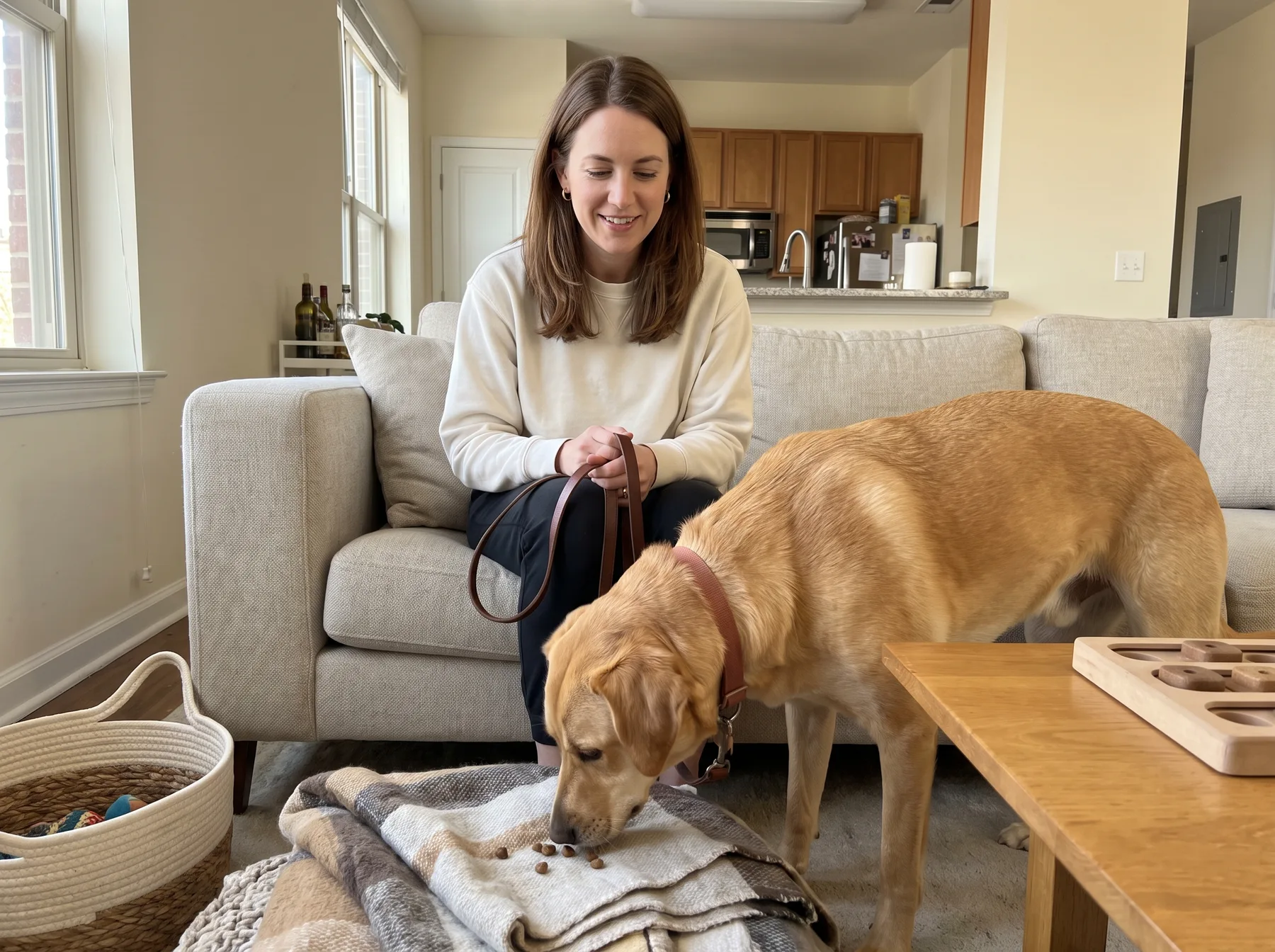
A good enrichment plan does not keep a dog busy every minute. It gives them safe ways to sniff, search, chew, move, learn, make choices, and rest. The best dog enrichment ideas fit the individual dog and leave them able to recover calmly afterward.
This guide will help you choose activities, adjust difficulty, and build a realistic weekly schedule without turning enrichment into another demanding task for you or your dog.
What dog enrichment is supposed to do
Enrichment gives dogs appropriate outlets for natural behavior. Depending on the dog, that may include sniffing, foraging, chewing, digging, exploring, playing, solving simple problems, or interacting with familiar people.
The goal is not constant excitement or physical exhaustion. A useful activity should meet a need without causing distress, injury, conflict, or prolonged overarousal.
Enrichment can support daily life by:
- Giving a dog more appropriate choices
- Adding variety to a predictable routine
- Providing mental activity when long walks are not possible
- Helping meals last longer
- Building confidence through manageable challenges
- Creating positive routines around grooming, confinement, or quiet time
Enrichment is not a cure for fear, separation distress, aggression, pain, or other medical and behavioral concerns. It can be part of a broader support plan, but it should not replace veterinary care or qualified behavior help.
Start with the dog in front of you
An activity that relaxes one dog may frustrate or overstimulate another. Before planning the week, consider your dog’s health, history, preferences, and living environment.
Age and physical ability
Puppies need short activities, safe textures, and plenty of sleep. Their growing bodies are not suited to repetitive jumping, forced running, or sharp turns.
Adult dogs vary widely in stamina. Breed traits may offer clues, but they should not override the individual dog’s behavior and physical condition.
Senior dogs may still enjoy searching, learning, and exploring. Adjust for vision or hearing changes, arthritis, dental health, and reduced endurance. Place food searches where the dog can reach them without slipping, climbing, or holding an uncomfortable posture.
Ask your veterinarian what activity is appropriate if your dog has pain, mobility limitations, breathing difficulties, recent surgery, or a medical condition affected by exercise or diet.
Adjustment and stress level
A newly adopted dog may not be ready for complicated puzzles, busy outings, or close social interaction. Some dogs need several quiet days before they begin to investigate toys or accept food consistently.
Low participation during early adjustment does not necessarily mean the dog dislikes enrichment. They may be tired, uncertain, nauseated, overwhelmed, or still learning that the environment is safe. The first month with an adopted dog should prioritize predictable care, sleep, and low-pressure opportunities.
Food motivation and dietary needs
Food is convenient for enrichment, but it is not the only option. Exploration, sniffing, toys, social contact, access to safe outdoor space, and permission to watch the environment can all be rewarding.
When using food, measure it from the dog’s normal daily allowance when practical. Check with your veterinarian before changing the diet of a puppy, a dog with allergies, or a dog with a medical condition. Avoid foods that are toxic to dogs, and account for treats when managing weight.
Household and housing limits
Choose activities that work in your actual space. An apartment hallway may suit a quiet food search, while tug or fetch may require more room. In a multi-pet household, food puzzles and chews may need to be offered behind gates or in separate rooms to prevent tension.
Renters should avoid attaching equipment to walls, doors, or fixtures without permission. Noise also matters. A hard rolling toy on an upstairs floor may disturb neighbors even if the dog enjoys it.
Known chewing and swallowing habits
Some dogs carefully lick or nibble enrichment items. Others tear, crush, or swallow pieces. Observe how your dog uses a new object before deciding whether it is appropriate.
Six types of dog enrichment ideas
A balanced plan can draw from several categories. You do not need to include every category each day.
1. Scent and foraging activities
Sniffing and searching let a dog gather information and make choices. Easy options include:
- Scattering part of a meal across a clean rug or patch of grass
- Hiding visible pieces of kibble around one room
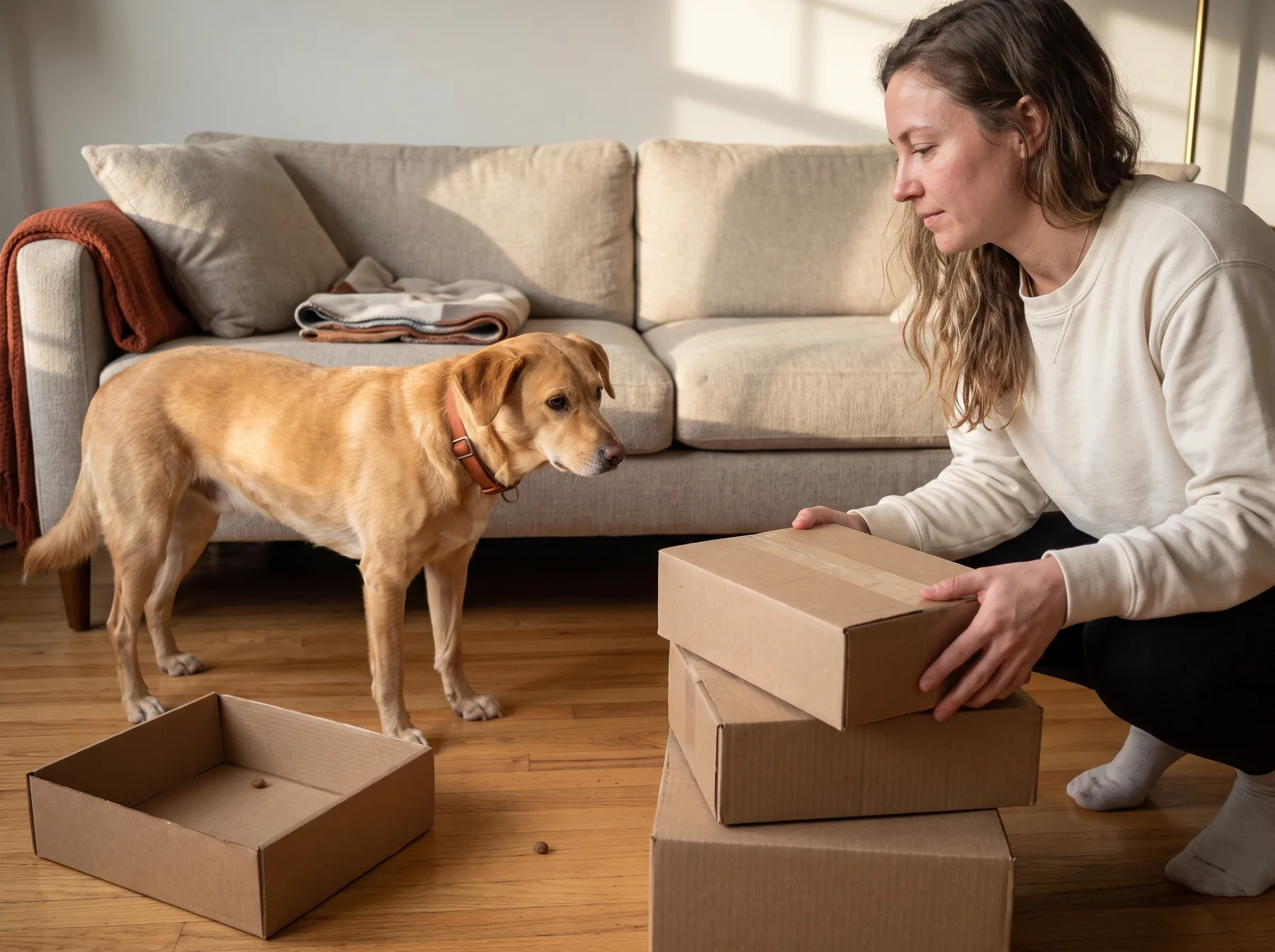
- Placing food in an open cardboard box with loosely crumpled paper
- Letting the dog choose the pace and direction of part of a walk
- Hiding a familiar toy for the dog to locate
Begin with food or an object in plain sight. Increase difficulty only when the dog searches comfortably and succeeds most of the time. Our indoor Find It game progression offers a structured way to build this skill.
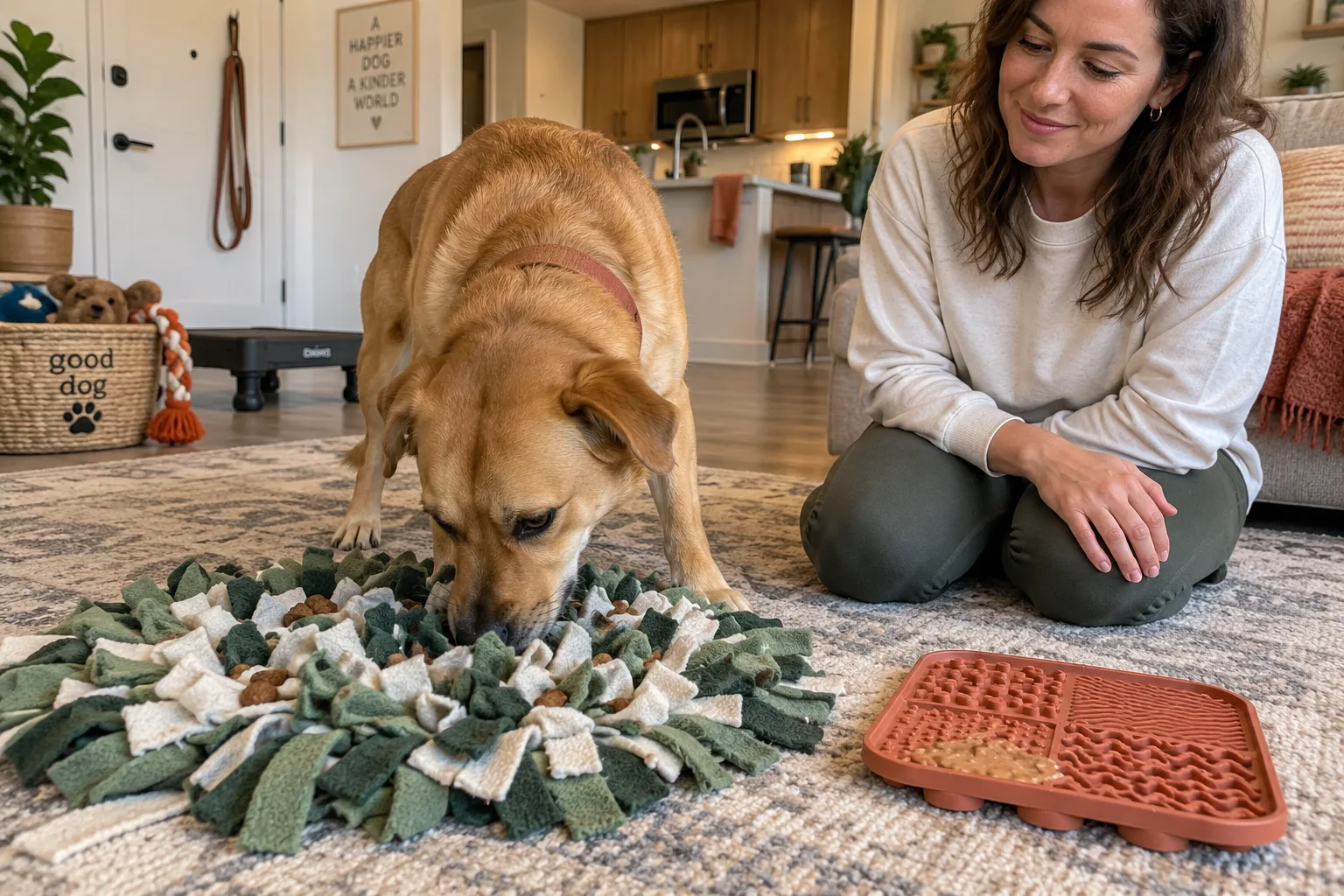
A washable dog snuffle mat for supervised food searches is an optional alternative to scattering food. Check the dimensions and washing instructions, and do not leave it with a dog who pulls off or swallows fabric.
2. Licking and food puzzles
Licking and food extraction can lengthen a meal or provide a quiet activity. You might spread wet dog food on a suitable plate, fill a durable food toy, or place kibble in a simple puzzle designed for dogs.
A textured silicone dog lick mat can be useful for supervised feeding or cooperative care routines. Choose an appropriate size, review how it attaches and cleans, and remove it when the food is gone if your dog may chew the silicone.
Start with loosely packed food that is easy to reach. Freezing food or packing it tightly can make the task much harder. Difficulty should come later, after the dog understands how the item works.
3. Chewing and shredding
Chewing can be satisfying, but the safest option depends on dental health, jaw strength, material, size, and swallowing habits. No chew is universally safe.
Ask your veterinarian about appropriate chew choices, especially for puppies, older dogs, powerful chewers, or dogs with damaged teeth. A chew should be large enough that it cannot be swallowed whole. Monitor for cracking, splintering, sharp edges, and missing pieces.
Some dogs enjoy shredding plain cardboard or packing paper. Remove tape, staples, labels, string, and plastic first. Skip shredding games for dogs who consume paper or cardboard rather than spitting it out.
4. Movement and body awareness
Physical enrichment does not have to mean intense exercise. Controlled movement can include:
- Stepping over a broom handle placed flat on the floor
- Walking around cones or household objects with wide spacing
- Exploring different stable surfaces at the dog’s choice
- Following a treat lure through a gentle turn
- Taking a slow sniff-focused walk
Avoid slippery floors, unstable equipment, forced positions, and repetitive jumping. Stop if you see limping, lagging, stiffness, reluctance, excessive panting, or a sudden change in movement.
5. Training and problem solving
Short, reward-based training sessions provide mental activity and improve communication. Useful skills include touching a hand target, going to a mat, trading an item, waiting at a door, or putting front paws on a low stable platform.
Keep sessions short enough that the dog remains comfortable. One to three minutes may be plenty for a puppy, a newly adopted dog, or a dog learning in a distracting environment. If the dog walks away, pauses repeatedly, scratches, sniffs the floor, or stops taking food, make the task easier or end the session.
For a broader foundation, see our guide to humane rescue dog training.
6. Social and environmental enrichment
Some dogs enjoy interaction with familiar people or compatible dogs. Others find social contact tiring or stressful. Social enrichment should be chosen, not imposed.
Examples include gentle play, relaxed time near a trusted person, watching the street from a comfortable distance, exploring a quiet new location, or sniffing an object brought in from outside.
Dog parks, crowded stores, group events, and greetings with unfamiliar dogs are not necessary for a fulfilling life. If your dog avoids interaction, stiffens, hides, barks, lunges, or struggles to recover, increase distance and seek qualified guidance when needed.
How to match difficulty to your dog
Think of enrichment as a ladder. The first level should be easy enough that your dog understands the activity without repeated prompting.
For a food search, the ladder might look like this:
- Place food in front of the dog.
- Place several pieces a few inches apart.
- Scatter food across a small visible area.
- Put food beside furniture where it remains easy to see.
- Hide food in simple locations within one familiar room.
- Add safe containers or move the search to another quiet area.
Move up only when your dog approaches readily, solves the current level, and remains relaxed. If the dog gives up, paws frantically, vocalizes, destroys the setup, or seeks help repeatedly, move down one or more levels.
Success should not require the dog to become desperate. Opening a lid, untying fabric, or manipulating a complicated mechanism may be interesting for some dogs and intensely frustrating for others.
Build a safe weekly enrichment plan
Start with what already happens. Meals, potty trips, walks, grooming, and bedtime routines are easier to maintain than an entirely new schedule.
Step 1: Choose two reliable activities
Pick two options your dog already enjoys or can complete easily. For example:
- A five-minute sniff break during a regular walk
- Part of breakfast scattered in one room
- A one-minute hand-target session
- A supervised chew after the evening potty trip
Repeat these for several days before adding more. Predictability can be especially helpful for newly adopted dogs.
Step 2: Add variety gradually
Introduce one new variable at a time. Change the location, food placement, duration, or object, but not all of them together. This helps you identify what made the activity easier or harder.
Step 3: Alternate active and quiet days
A dog does not need a novel outing every day. Busy daycare, a visitor, a veterinary appointment, or a long neighborhood walk may already create a high-demand day.
Follow demanding events with familiar, lower-intensity options and enough sleep. Rest is part of a complete enrichment plan, not an absence of care.
Step 4: Keep a brief record
A simple note can reveal patterns. Record:
- The activity and duration
- Whether the dog chose to participate
- Body language during the activity
- How easily the dog settled afterward
- Any digestive, mobility, or guarding concerns
You do not need a detailed spreadsheet. A few words in a phone calendar are enough.
A sample weekly schedule
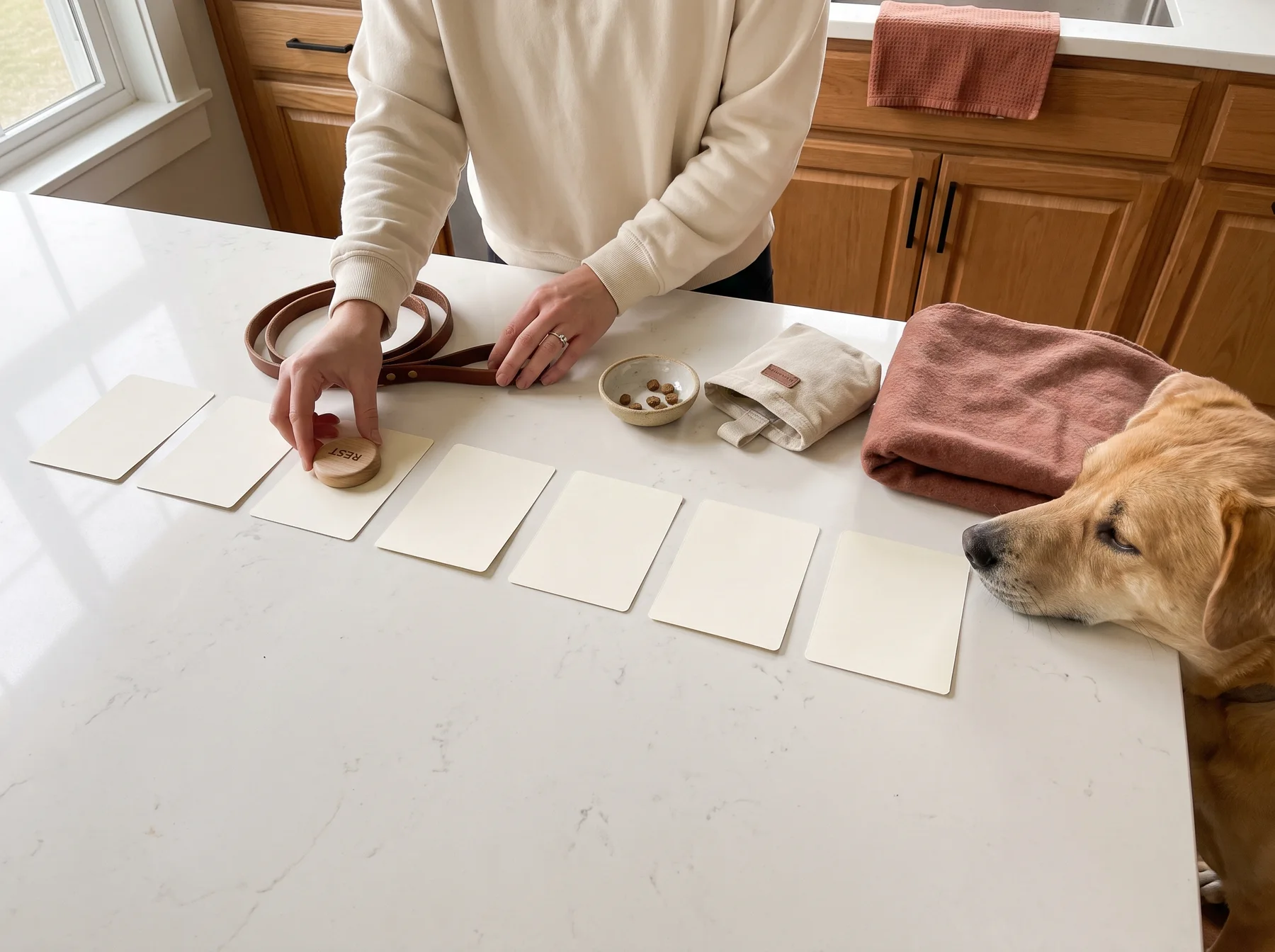
Adjust this example for your dog’s age, mobility, diet, and routine.
| Day | Main activity | Quiet option | |---|---|---| | Monday | Five-minute sniff-focused walk segment | Easy food scatter at dinner | | Tuesday | Two-minute reward-based training session | Rest with a safe supervised chew | | Wednesday | Find It game in one familiar room | Calm observation from a comfortable spot | | Thursday | Gentle body-awareness exercise | Meal served in an easy food toy | | Friday | Explore a quiet route or outdoor area | Familiar licking activity | | Saturday | Play chosen by the dog, such as tug or toy search | Extra uninterrupted rest | | Sunday | Repeat the week’s favorite activity | Normal meal and low-key evening |
This is a menu, not a quota. On a difficult day, basic care and rest may be the right plan.
Signs the plan needs adjusting
Make the activity easier, shorter, or less frequent if your dog:
- Refuses an activity they usually enjoy
- Stops taking food or takes it with unusually hard, rapid movements
- Pants when the room is not hot and exercise does not explain it
- Paces, whines, barks, or cannot settle afterward
- Crouches, freezes, hides, turns away, or repeatedly tries to leave
- Guards the activity from people or other animals
- Vomits, has diarrhea, or develops changes in appetite
- Appears stiff, sore, lame, or reluctant to move
- Tears apart and swallows parts of enrichment materials
A single low-interest day can be normal. Sudden or persistent behavior changes deserve closer attention because discomfort or illness can look like disinterest, irritability, or reduced tolerance.
Contact a veterinarian for signs of pain, repeated digestive problems, appetite changes, unusual fatigue, breathing difficulty, suspected ingestion, dental damage, or a sudden behavior change. Seek urgent veterinary guidance for choking, collapse, severe breathing difficulty, a swollen abdomen, repeated unproductive retching, or suspected toxin exposure.
A certified reward-based trainer can help with activity selection, skill building, and mild frustration. For guarding, severe fear, panic, aggression, or behavior that creates a safety risk, consult a qualified behavior professional. Your veterinarian can help rule out medical causes and provide an appropriate referral.
Common enrichment mistakes
Making every activity harder
Difficulty is not the only path to variety. Change the scent, location, texture, or social setting while keeping the task easy. Dogs benefit from successful repetition.
Using exercise to exhaust the dog
Repeated high-intensity activity can increase arousal and may not teach a dog how to settle. Physical exercise should suit the dog’s health and be balanced with sniffing, choice, quiet engagement, and rest.
Leaving toys available without checking them
Objects wear down, chewing habits change, and a safe item can become damaged. Inspect toys and feeding tools regularly. Supervise whenever you are uncertain about durability or swallowing risk.
Ignoring refusal
A dog who walks away is communicating. Avoid forcing participation or repeatedly placing the dog back at the activity. Check whether the task is too hard, the environment is distracting, the surface is uncomfortable, or the dog needs sleep.
Offering valued items around other pets
Even dogs who normally coexist peacefully may feel tension around food, chews, or puzzles. Use separate rooms, closed doors, crates, or secure gates as appropriate. Pick up items before bringing pets back together.
Your weekly enrichment checklist
Before starting the week, ask:
- Does each activity fit my dog’s age, health, size, and mobility?
- Can my dog choose whether to participate?
- Is the difficulty low enough for frequent success?
- Have I accounted for food used in puzzles and searches?
- Can pets enjoy valuable items separately?
- Will I supervise new objects and inspect them afterward?
- Are demanding days followed by familiar routines and rest?
- Does my dog return to a calm baseline after the activity?
A useful plan can be simple. Two or three activities that your dog genuinely enjoys are more valuable than a packed schedule that creates frustration or leaves both of you tired.

Join the conversation
0 comments
Leave a comment
Your email address will not be published. Comments are reviewed before appearing.