
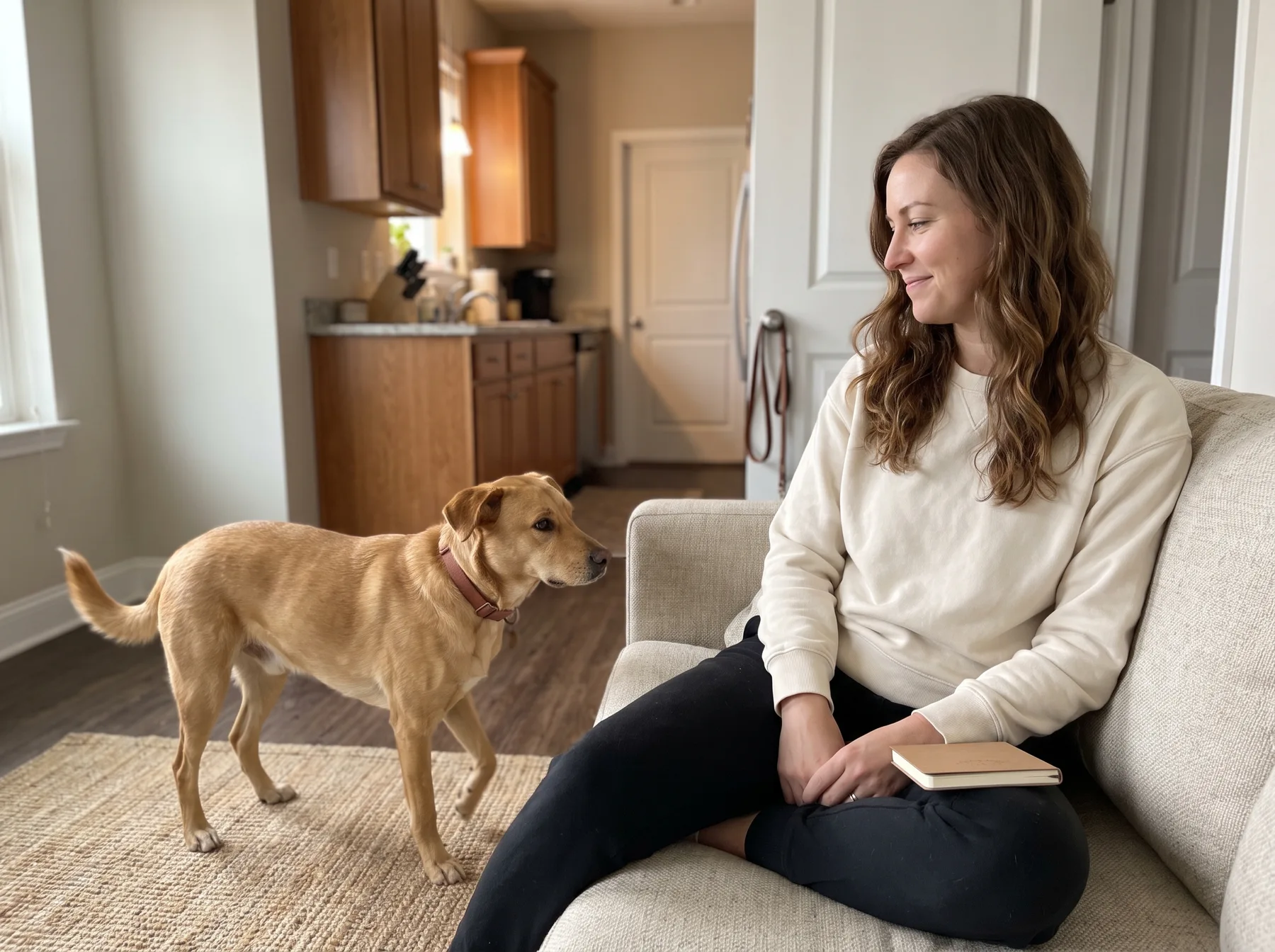
Bringing home a dog creates an immediate list of questions. How often should they eat? Is that much sleeping normal? Should you worry if they skip a meal, have soft stool, or seem unusually quiet?
This new dog care guide helps you build a manageable routine while separating useful home observation from veterinary diagnosis. You do not need to interpret every behavior or inspect your dog constantly. Your job is to provide consistent care, notice meaningful changes, keep a simple record, and contact a veterinarian when symptoms or circumstances call for professional help.
The safe goal: consistency, not a perfect schedule
A daily routine gives your dog predictable opportunities to eat, drink, rest, eliminate, exercise, and spend time with the household. It also gives you a baseline. Once you know what is typical for your dog, changes in appetite, energy, breathing, movement, or bathroom habits become easier to recognize.
The first days after adoption may not reveal a reliable baseline. Stress can affect sleep, appetite, thirst, stool, and sociability. Some dogs explore immediately, while others remain quiet or cautious. A dog may also behave differently as they become more comfortable.
Normal adjustment can include:
- Sleeping more than expected after leaving a shelter, foster home, breeder, or previous household
- Eating cautiously or preferring privacy at meals
- Following household members closely or choosing to rest alone
- Mild, short-lived digestive changes associated with stress or a sudden food transition
- Hesitation around unfamiliar floors, stairs, doors, traffic, or handling
Adjustment should not be used to explain away persistent or severe symptoms. Vomiting, repeated diarrhea, difficulty breathing, collapse, marked pain, inability to urinate, or rapidly worsening lethargy require veterinary guidance.
What changes your new dog’s care needs?
A useful routine must fit the individual dog. Before copying a schedule, consider these factors.
Age and life stage
Puppies generally need more frequent meals, bathroom breaks, supervision, and veterinary visits than healthy adult dogs. Their vaccine status may also limit where they can safely walk or socialize. Ask your veterinarian about local disease risks and appropriate public access.
Senior dogs may need easier access to water, more bathroom opportunities, nonslip flooring, softer resting areas, and closer monitoring of mobility, appetite, vision, hearing, or cognitive changes.
Size, body shape, and mobility
A small dog may need different meal portions, equipment, and weather protection than a large dog. Dogs with short muzzles can have greater difficulty in heat. Long-backed dogs, dogs recovering from surgery, and dogs with arthritis or other mobility limitations may need ramps, blocked stairs, or modified exercise.
Your veterinarian can help determine an appropriate body condition and activity plan. Feeding charts are starting points, not a diagnosis of how much a particular dog should eat.
Medical and behavioral history
Review adoption, foster, shelter, breeder, and prior veterinary records. Note current medications, allergies, vaccine dates, parasite prevention, surgeries, known fears, and previous injuries.
If the history is incomplete, avoid assuming that silence means the dog has no medical needs. Schedule a veterinary appointment and tell the clinic what is unknown.
Household and housing
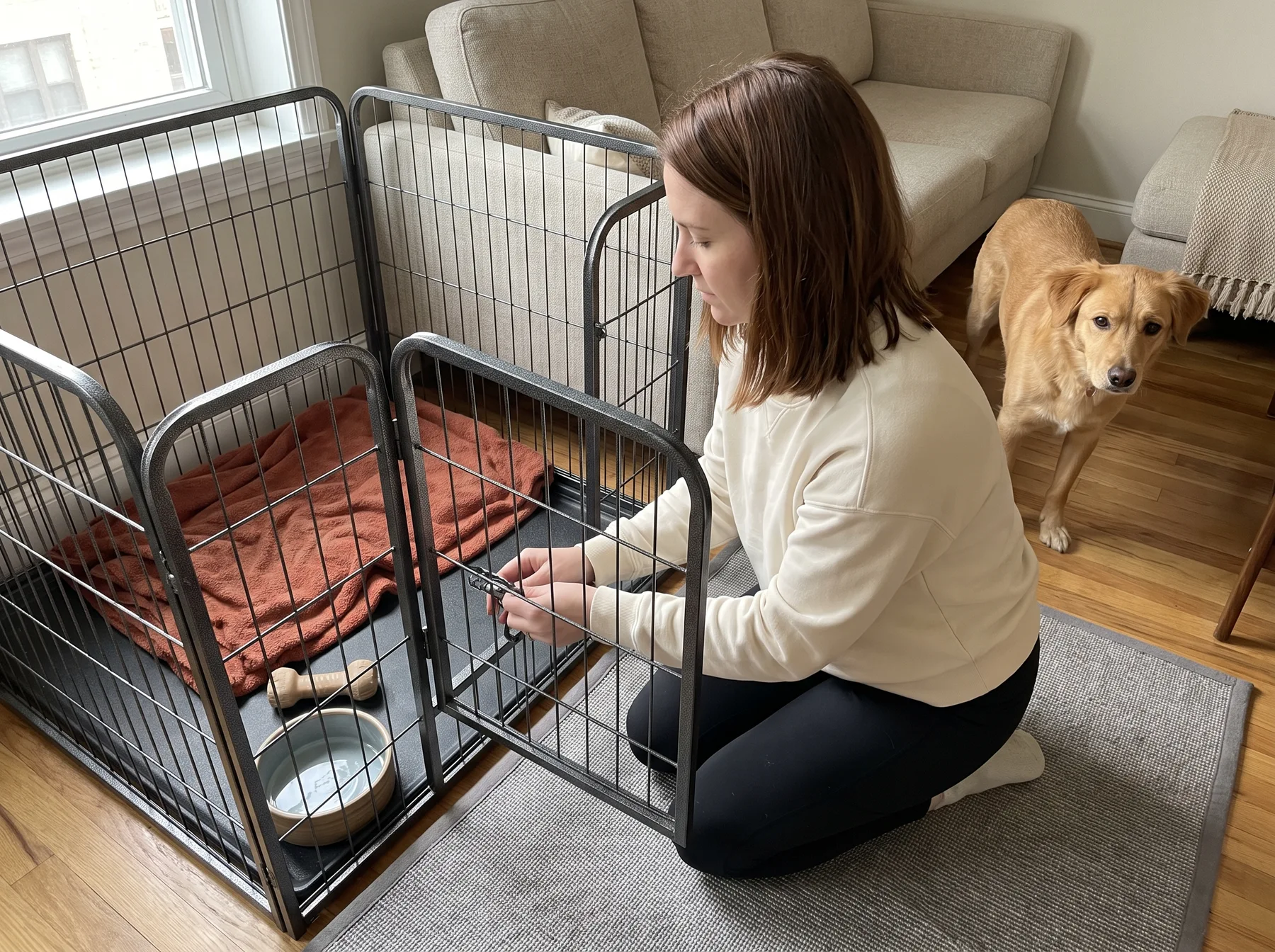
Children, older adults, other animals, unfenced outdoor space, apartment hallways, and work schedules all affect daily care. Separate new pets when unsupervised until their interactions have been assessed carefully. Use gates, doors, or a properly sized indoor dog playpen if a managed area would help, but do not use confinement to force interactions or isolate a distressed dog for long periods.
Renters should also check pet rules, shared-space requirements, and local leash and licensing laws.
New dog care guide for a calm daily routine
Use the following framework rather than trying to schedule every minute. Keep the first week quiet, predictable, and easy to adjust.
Morning: bathroom, observation, food, and medication
Take your dog to an appropriate bathroom area soon after waking. Puppies and dogs with uncertain housetraining may need to go out immediately. Use a leash even in a fenced area until you understand the dog’s escape behavior and the security of the enclosure.
Notice whether your dog urinates and passes stool without straining. You do not need to examine every detail, but it is helpful to recognize the usual frequency, consistency, and effort.
Offer breakfast according to the diet and portion plan recommended for your dog. If possible, continue the food used by the previous caregiver for several days. A gradual transition can reduce digestive disruption unless a veterinarian advises an immediate change.
Give medications only as directed. Do not use human pain relievers, leftover prescriptions, supplements, or another pet’s medication without veterinary approval.
Midday: water, bathroom access, rest, and light activity
Keep fresh water available unless a veterinarian has given specific instructions. Wash the bowl daily and refill it when it becomes dirty. Note a major increase or decrease in drinking, but avoid trying to diagnose the cause at home.
Dogs may drink differently depending on food type, weather, exercise, body size, medication, and stress. If you are tracking intake because of a concern, ask the veterinary clinic how they want it measured.
Offer a bathroom opportunity appropriate to the dog’s age and health. Follow it with calm activity, such as sniffing in a quiet area, a brief training session, or gentle indoor enrichment. Newly adopted dogs often benefit more from low-pressure exploration than from a packed schedule of outings and introductions.
Make space for uninterrupted sleep. A resting dog should not be repeatedly touched, photographed, introduced to visitors, or encouraged to play.
Evening: exercise, dinner, grooming check, and settling
Choose exercise based on the dog in front of you. A healthy young adult may enjoy a longer sniffing walk. A puppy may need several short outings. A senior dog or dog with limited mobility may do better with slower, shorter walks on stable surfaces.
Check equipment before leaving. A collar or harness should fit securely without restricting normal movement or breathing. Review this seven-point harness fit check before relying on unfamiliar gear.
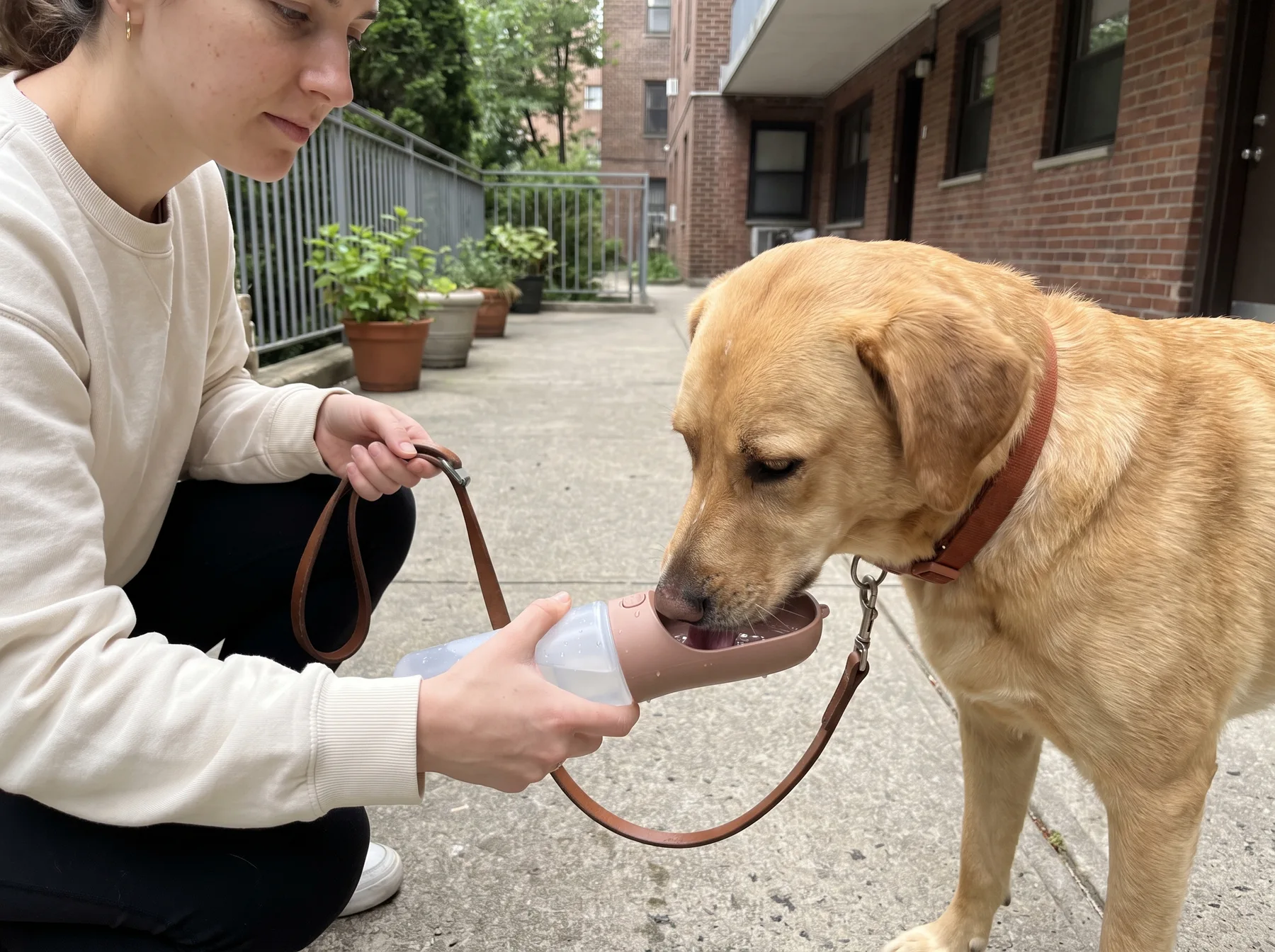
For longer walks or travel, carry water and a clean container. A portable dog water bottle with an integrated tray is one optional solution. Compare capacity, closure security, materials, and cleaning instructions. Never depend on finding a public bowl.
Serve dinner at a consistent time and give your dog privacy if they appear uncomfortable eating near people or other animals. Feed pets separately to prevent conflict and to make appetite changes easier to notice.
Finish with a brief hands-off visual check and any grooming your dog already accepts. If paw handling is difficult, use a gradual, no-force approach rather than holding the dog down. The same principle applies to brushing, ear care, and nail handling.
Offer one last bathroom break before bed. Puppies and dogs with medical needs may require additional overnight access.
A one-minute health check at home
A daily check should be brief and calm. Observation is often more useful than restraining a new dog for a full physical inspection.
Appetite and water intake
Notice whether your dog approaches food, eats a typical amount, and drinks. One missed meal can have different significance depending on age, health, medication, and accompanying symptoms. A puppy, a dog with diabetes, or a dog who is also vomiting needs quicker guidance than a healthy adult who declines one meal but otherwise behaves normally.
Energy and responsiveness
Compare activity to your dog’s emerging baseline. Resting after a stressful day is different from being difficult to wake, unable to stand, disoriented, or uninterested in everything.
Breathing
At rest, breathing should look comfortable and unforced. Seek urgent advice for open-mouth breathing unrelated to heat or exercise, pronounced abdominal effort, choking, repeated unproductive coughing, or pale, gray, or blue gums.
Movement and posture
Watch your dog rise, walk, turn, and lie down. Limping, stiffness, reluctance to use a limb, a hunched posture, or repeated difficulty getting comfortable can indicate pain. Limit activity and contact a veterinarian if the change is sudden, severe, persistent, or associated with an injury.
Eyes, ears, nose, skin, and coat
Look for sudden swelling, marked redness, wounds, discharge, squinting, persistent scratching, hair loss, or a strong new odor. Do not insert swabs or cleaners into the ears unless a veterinarian has shown you what to use and how to use it.
A dog who is squinting, holding an eye closed, or showing an injured or cloudy eye should receive prompt veterinary attention. Eye problems can worsen quickly.
Urination and stool
Record repeated vomiting or diarrhea, blood, straining, unusual frequency, accidents that represent a sudden change, or inability to pass urine or stool. A single soft stool may be monitored in an otherwise comfortable adult dog, but repeated symptoms or additional signs change the decision.
How to keep a useful care record
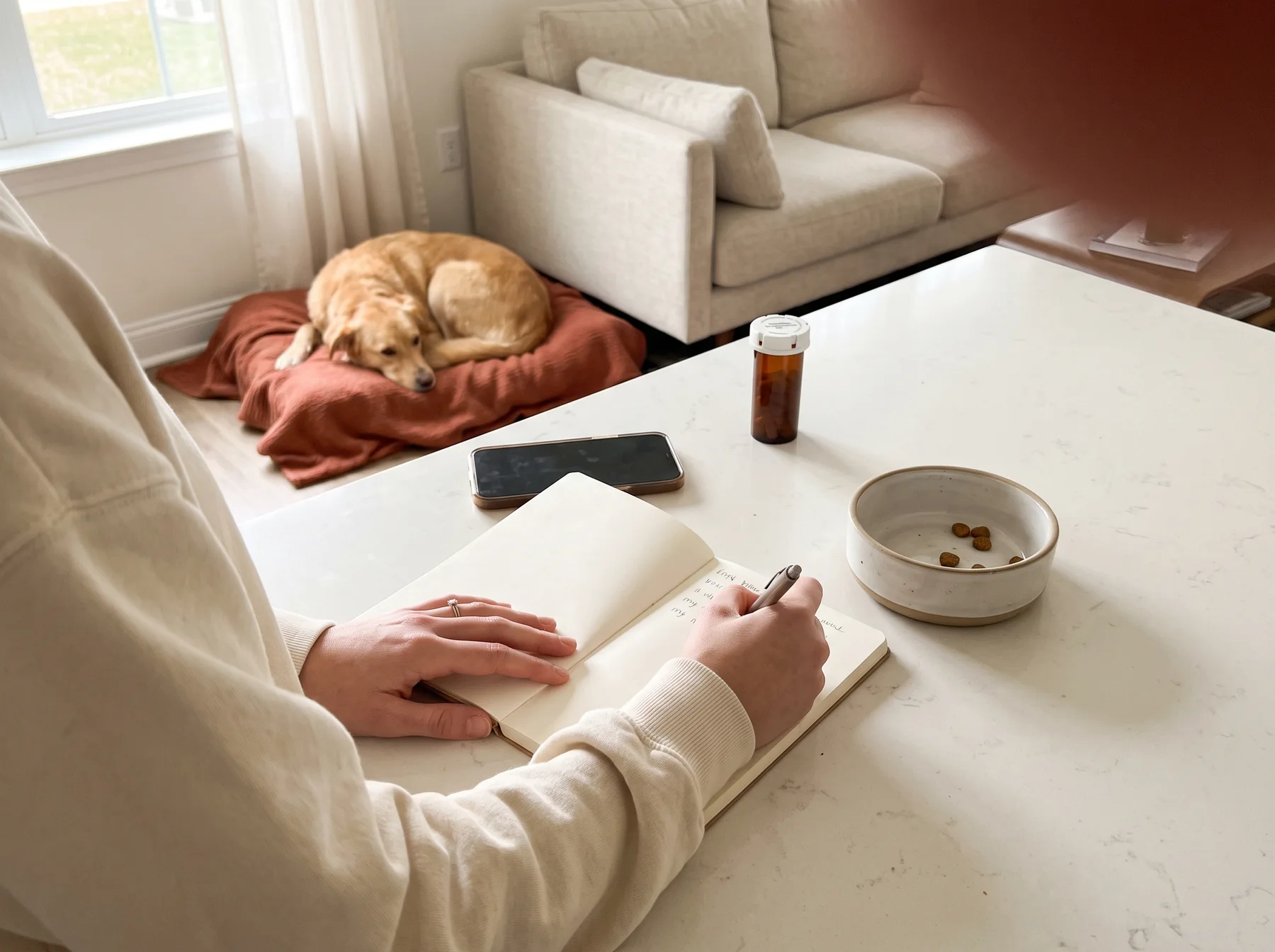
A simple phone note, calendar, or paper chart is enough. Record:
- Meals offered and how much was eaten
- Major changes in water intake
- Urination and stool concerns
- Vomiting, coughing, limping, itching, or unusual behavior
- Medication names, doses, and times given
- Photos of visible swelling, wounds, stool, or vomit when relevant
- Questions for the veterinary appointment
Use specific descriptions. “Vomited twice between 7 and 9 p.m. and refused dinner” is more useful than “seemed sick.” Video can help document intermittent coughing, unusual movement, or episodes that stop before the appointment. Do not delay urgent care to collect better documentation.
When to call a veterinarian
If you are uncertain, calling the clinic is appropriate. Staff can help determine whether your dog needs emergency care, a same-day assessment, or a routine appointment based on the full circumstances.
Seek emergency care now
Contact an emergency veterinary hospital for:
- Difficulty breathing, choking, collapse, or unresponsiveness
- Pale, blue, gray, or markedly abnormal gums
- Suspected poisoning or ingestion of medication, batteries, sharp objects, string, or other hazardous material
- A swollen or painful abdomen, especially with repeated unsuccessful attempts to vomit
- Major trauma, uncontrolled bleeding, or a serious wound
- Inability to urinate or repeated straining with little or no urine
- Prolonged or repeated seizures
- Signs of heatstroke, including collapse, confusion, or severe distress after heat exposure
Call while preparing to leave so the hospital can advise you. For suspected poisoning in the United States, contact a veterinarian or an established animal poison control service. Fees may apply.
Request same-day veterinary advice
Call your veterinarian promptly for:
- Repeated vomiting or diarrhea
- Blood in vomit, stool, or urine
- A painful, closed, injured, or suddenly cloudy eye
- Sudden limping, obvious pain, or inability to bear weight
- Refusal of food combined with lethargy, pain, vomiting, or another symptom
- A marked change in thirst or urination
- Persistent coughing, breathing changes, or nasal discharge with illness
- A surgical incision that opens, bleeds, swells, smells bad, or produces discharge
- Any concerning symptom in a very young puppy, medically fragile dog, or dog with a condition affected by missed food or medication
Schedule a routine appointment
Every newly adopted dog should have a veterinary relationship, even if records appear complete. The timing depends on health, age, medications, vaccine status, and the clinic’s advice. Bring all available records and a list of foods, preventives, medications, and concerns.
Routine appointments are also appropriate for persistent itching, recurring soft stool, dental odor, gradual mobility changes, weight change, lumps, behavior changes, or questions about diet and parasite prevention.
Behavior can have a medical component. New house soiling, irritability when touched, sleep disruption, reduced interest in activity, or sudden fear may warrant a veterinary assessment before being treated solely as a training problem.
Common care mistakes and better alternatives
Changing everything on the first day
A new food, long hike, bath, crowded pet store, and several introductions can overwhelm a dog and make symptoms harder to interpret. Start with essentials and add experiences gradually.
Assuming quiet behavior means the dog is settled
Some frightened or unwell dogs become still and withdrawn. Look at eating, drinking, movement, bathroom habits, breathing, and responsiveness rather than judging comfort from quietness alone.
Forcing physical checks
Holding down a fearful dog to inspect teeth, paws, or ears can increase fear and create a bite risk. Use visual observation, cooperative handling, and professional help. A reward-based trainer can help with grooming and handling skills. A qualified behavior professional is appropriate for intense fear or aggression, particularly when safety is a concern.
Waiting because a symptom might be stress
Stress can affect the body, but it does not rule out illness. Call a veterinarian when symptoms are severe, repeated, worsening, painful, or accompanied by reduced responsiveness.
Giving unapproved home remedies
Human medications and seemingly harmless supplements can be dangerous or interfere with treatment. Ask a veterinarian before giving any remedy, changing a prescription, or inducing vomiting.
Your short daily checklist
Use this list as a flexible prompt rather than a test:
- Fresh water is available and the bowl is clean
- Meals and medications are given as directed
- Bathroom opportunities fit the dog’s age and health
- Appetite, stool, urination, energy, breathing, and movement look typical
- Exercise is appropriate for weather, mobility, and vaccine status
- The dog has a quiet place for uninterrupted rest
- Doors, gates, leash equipment, food, medications, and household hazards are secure
- New or worsening symptoms are recorded and reported when needed
A good routine should make life calmer, not turn every day into an examination. Observe without hovering, adjust the schedule as you learn your dog’s needs, and use your veterinary team for diagnosis and treatment.

Join the conversation
0 comments
Leave a comment
Your email address will not be published. Comments are reviewed before appearing.