
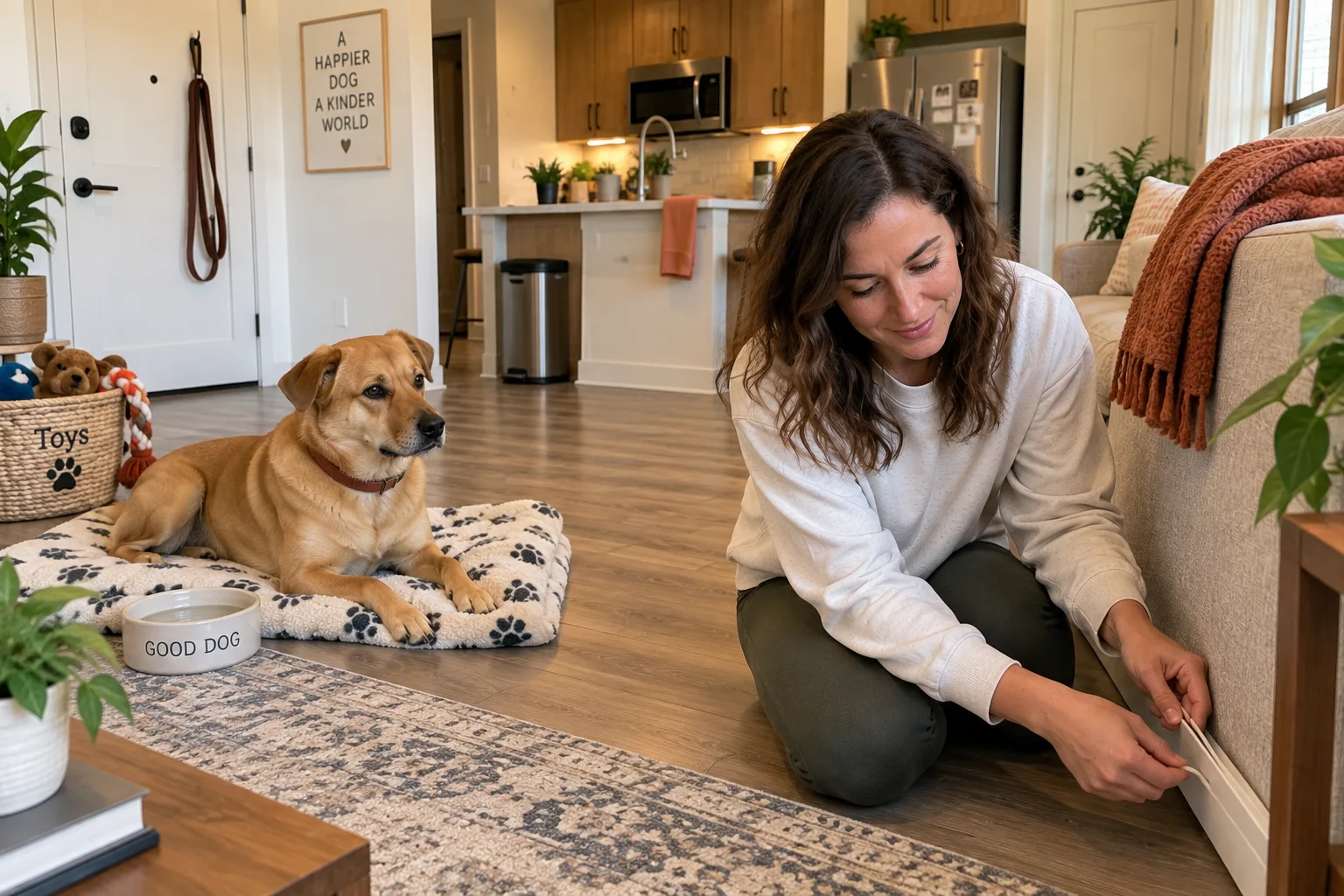
Bringing home a dog changes how you see ordinary objects. A trash can becomes a food puzzle. A charging cable becomes something to chew. An open exterior door becomes an escape route. Effective dog proofing house preparation means identifying these opportunities before your dog does, then using storage, barriers, supervision, and training together.
The goal is not to create a bare home or predict every possible behavior. It is to reduce preventable risks while you learn what your dog investigates, climbs, chews, or avoids. Puppies often need more extensive management, but adult dogs and seniors can also get into trouble when they are curious, anxious, hungry, or adjusting to unfamiliar surroundings.
Start with your dog and household
A generic safety checklist is useful, but the right setup depends on who will live in the space. Consider these factors before choosing gates, rearranging furniture, or deciding which rooms will be accessible.
Age and developmental stage
Puppies explore with their mouths and may chew during teething. They also fit through surprisingly small gaps and need frequent potty breaks. Adolescent dogs may be taller, stronger, and more persistent than expected.
Adult rescue dogs can arrive with unknown household experience. Even if a dog reportedly lived indoors, assume that your routines, doors, trash containers, and furniture are new to them. Senior dogs may need nonslip surfaces, clear walking paths, and barriers near stairs, especially if they have reduced vision or mobility.
Size, reach, and physical ability
Dog proof from the dog's actual height, not from floor level alone. Large dogs may reach food at the back of a counter. Small dogs may squeeze behind appliances or through railings. Athletic dogs can jump low barriers, while some determined climbers can use nearby furniture as a step.
Walk through the home at the dog's eye level. Look under furniture, behind doors, and along baseboards. Then stand and check tables, counters, shelves, and hanging bags that a taller dog might reach.
Known history and current behavior
Ask the shelter, rescue, foster home, or previous caregiver about chewing, scavenging, door rushing, separation distress, house training, and reactions to confinement. Treat this information as a starting point rather than a guarantee.
A newly adopted dog may behave differently as they settle in. Quiet behavior during the first few days does not necessarily mean the dog can safely have full access. Expand freedom gradually as you observe reliable patterns.
People, pets, and daily routines
Children may leave toys, snacks, craft supplies, or backpacks within reach. Housemates may forget to latch gates. Cats need feeding and litter areas the dog cannot access. Visitors, deliveries, and shared apartment hallways increase the chance of an exterior door being left open.
Choose precautions everyone in the household can follow consistently. A complicated system that is routinely ignored is less useful than a simple closed-door rule.
Dog proofing house essentials before arrival
Complete a first pass before your dog comes home. You can refine the setup after observing the dog, but the initial environment should cover the most serious risks.
Put hazardous items behind secure doors
Move medications, vitamins, nicotine products, cannabis products, cleaning supplies, pesticides, fertilizers, batteries, adhesives, and automotive fluids into closed cabinets the dog cannot open. A high shelf may not be enough if items can fall or if the dog can climb nearby furniture.
Keep purses, backpacks, coats, and visitor belongings out of reach. These frequently contain gum, medication, snacks, or other unsafe items.
Learn which foods are hazardous to dogs, including chocolate, grapes, raisins, onions, garlic, alcohol, caffeine, and products containing xylitol, which may also be labeled birch sugar. Store all food securely rather than relying on the dog to ignore it.
Manage access instead of relying on verbal cues
A closed door, secured cabinet, or properly installed gate prevents access when nobody is actively watching. Training cues such as “leave it” are valuable, but they are not substitutes for physical management around serious hazards.
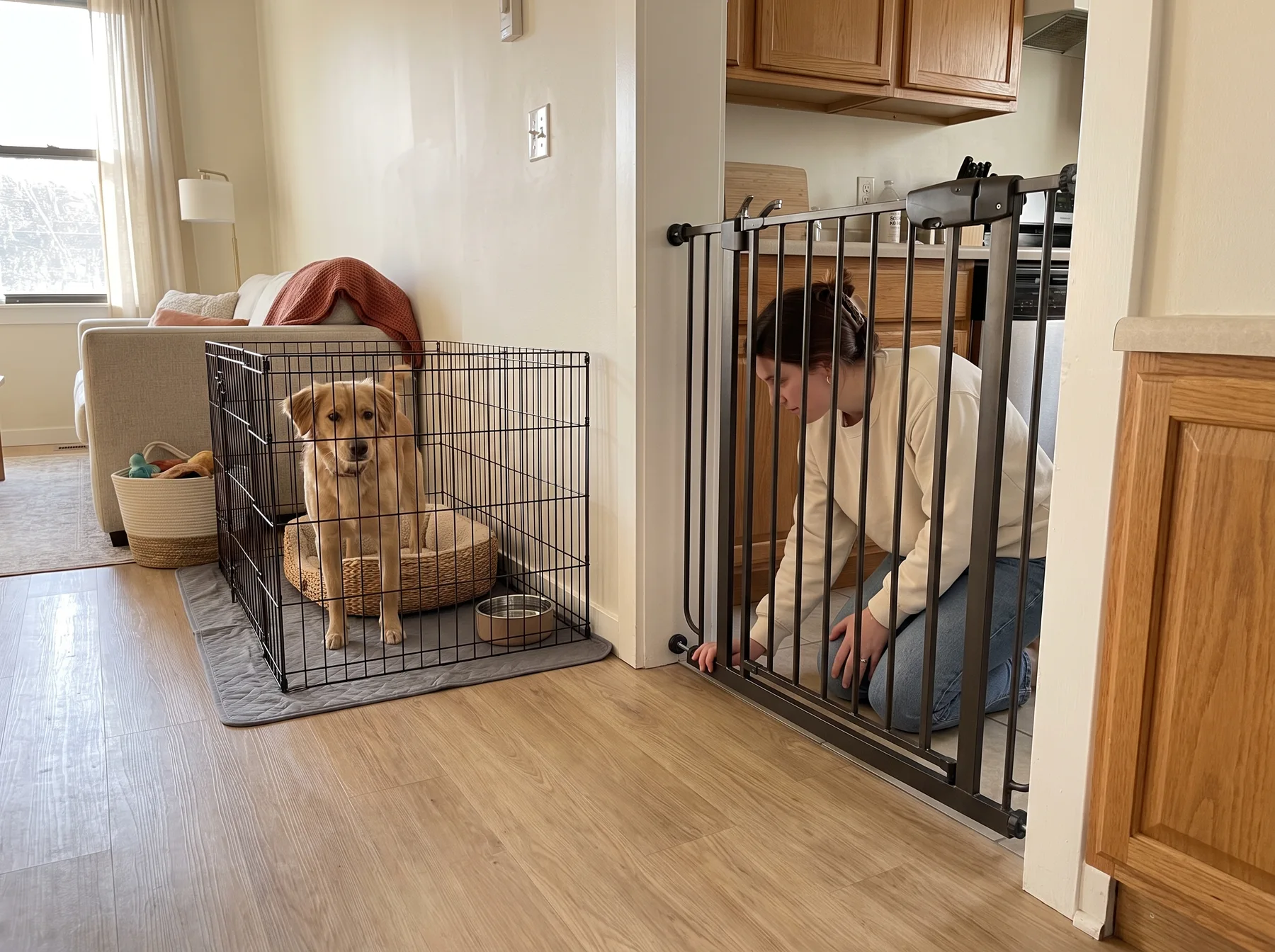
For low-risk room boundaries, a pressure-mounted pet gate may be an option. Measure the full opening, check the manufacturer's size and dog suitability, and inspect the fit regularly. Pressure-mounted gates should not be treated as fall protection at the top of stairs. Use a securely installed gate designed for that location instead.
An indoor dog playpen can create a managed area for some puppies or adult dogs. Check the panel height, total dimensions, stability, and floor protection. A pen is not appropriate for a dog who climbs, panics, or tries to force through it.
Create a comfortable managed area
Choose a low-traffic area with a bed, water, safe chew options, and enough room to change position comfortably. This area might be part of the living room, a gated kitchen section, or another space near household activity.
A managed area should not function as punishment. Introduce it with short, pleasant sessions while you remain nearby. Feed treats or meals there if your dog is comfortable eating. Gradually build duration rather than placing a newly arrived dog inside and immediately leaving for hours.
For a broader adjustment plan, see the first-month guide for adopting a rescue dog.
Room-by-room dog proofing checklist
Entryway and exterior doors
The entryway is one of the highest-priority areas because a single open door can lead directly outside.
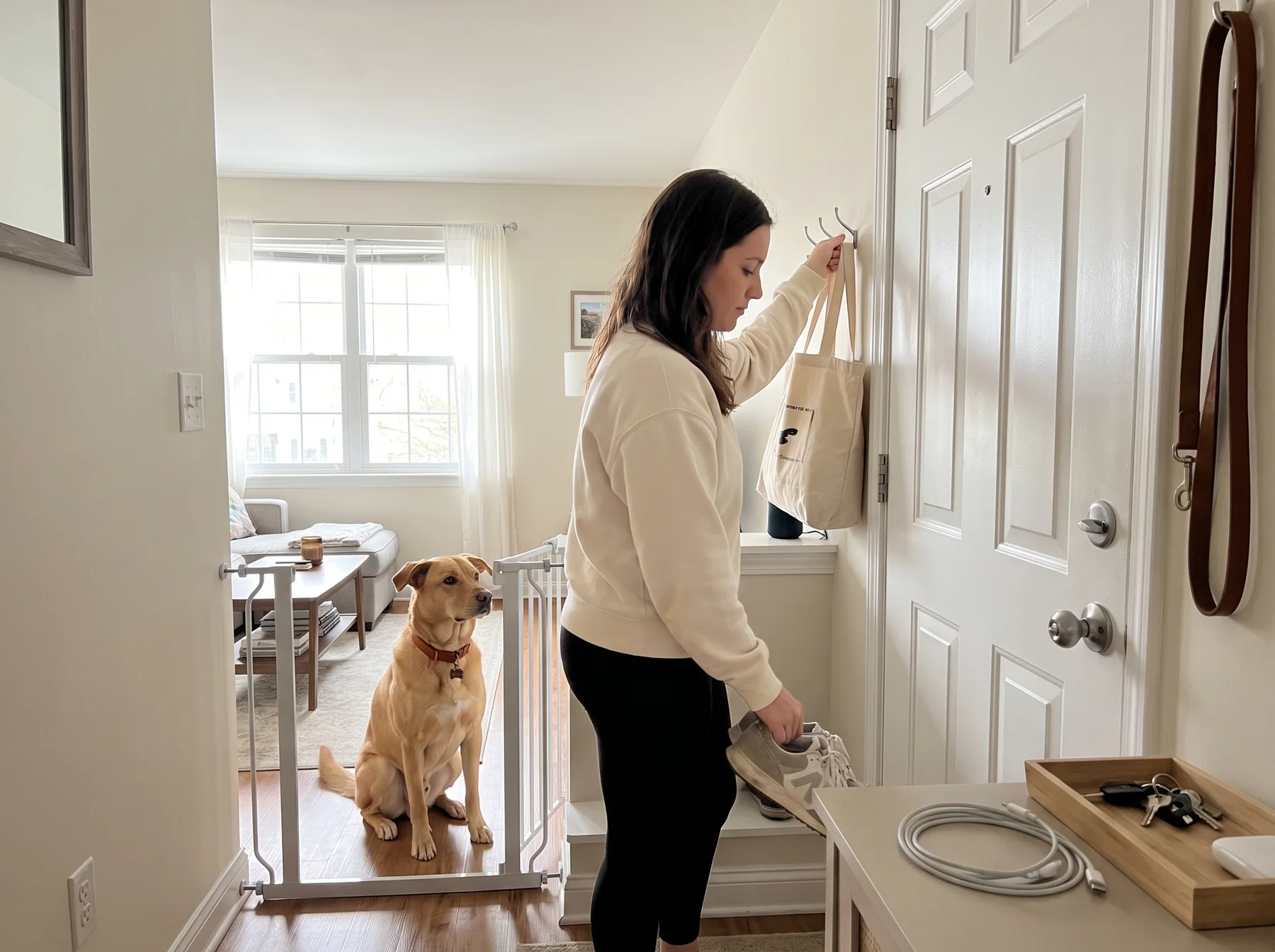
- Place leashes and harnesses where adults can reach them without leaving the door open.
- Keep identification tags current and confirm that microchip registration has your correct contact information.
- Use a gate, closed interior door, or other second boundary when practical.
- Ask visitors to wait while you secure the dog before opening the door.
- Keep shoes, umbrellas, keys with attached fobs, and bags off the floor.
- Check window and door screens. Screens can deter insects, but many are not strong enough to contain a dog.
Practice calm behavior away from the door using rewards. Do not test the training by opening an unsecured exterior door.
Living room and family room
Look for loose cables, reclining furniture, unstable lamps, remote controls, children's toys, candles, and small objects under furniture.
Route electrical cords behind furniture or use protective cord management. Unplug items that do not need to remain connected. Keep remotes, earbuds, game controllers, craft materials, and batteries in drawers or containers with secure lids.
Check recliners and sofa beds before operating them. Dogs can crawl underneath or into moving mechanisms. Anchor furniture that could tip, particularly if a dog might jump against it.
Houseplants deserve individual review. Identify each plant by its exact name and verify whether it is considered toxic to dogs. Move unsafe plants out of the home rather than assuming a high stand will always prevent access. Also remove access to potting soil, fertilizer, and standing water in saucers.
Kitchen and dining area
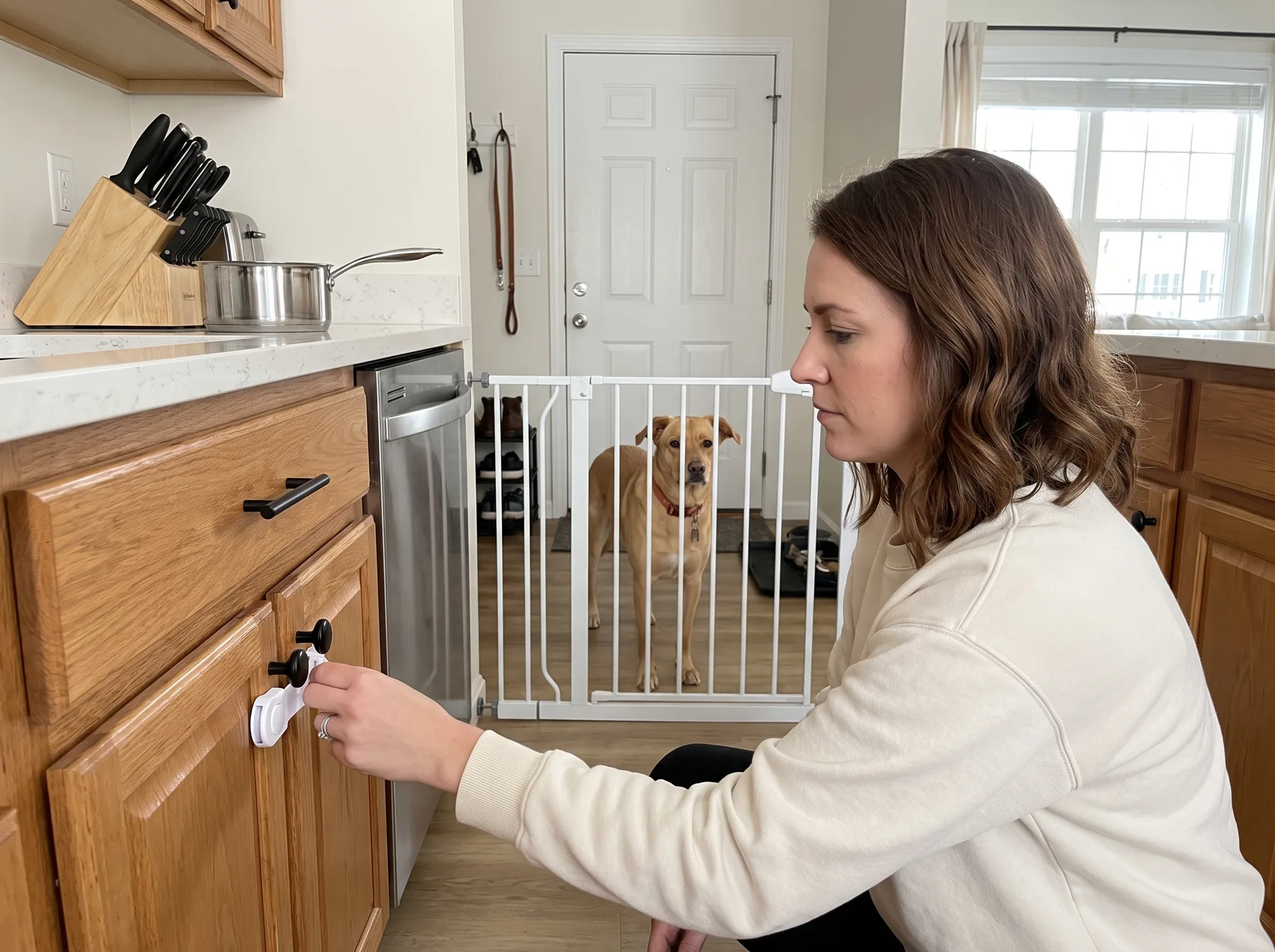
Kitchens combine food, sharp objects, heat, and trash. Keep the dog out of the active cooking zone, especially when carrying hot pans or opening the oven.
- Store food inside cabinets, the refrigerator, or secure containers.
- Move knives and utensils away from counter edges.
- Turn pot handles inward while cooking.
- Close the dishwasher, which may hold sharp utensils and food residue.
- Wipe up spills promptly.
- Use a lidded trash can that the dog cannot open or place trash behind a closed door.
- Keep reusable grocery bags and food delivery packaging out of reach.
Do not leave food cooling on a counter if your dog's reach is unknown. A dog who has never counter surfed in your presence may investigate when left alone.
Bathroom
Close the toilet lid and put medications, razors, cosmetics, dental floss, cotton swabs, menstrual products, and cleaning supplies inside secure storage. Wastebaskets should have a dog-resistant lid or remain behind a closed cabinet door.
Store towels and bath mats if your dog chews fabric. Keep the floor dry to reduce slipping, especially for seniors and dogs with mobility limitations. Check that curling irons, hair dryers, and other heated tools are unplugged and cool before putting them away.
Bedroom
Nightstands often hold medications, gum, earbuds, glasses, and charging cables. Move these into a drawer. Store laundry in a closed hamper, including socks and underwear that could cause a gastrointestinal obstruction if swallowed.
Check beneath the bed for dropped items. Secure blind cords and curtain ties so they cannot loop around a dog. If the dog sleeps in the room, leave a clear route to the door and use a night-light if an older dog has difficulty seeing in low light.
Laundry room
Detergent, dryer sheets, stain removers, bleach, and laundry pods require secure storage. Keep appliance doors closed and check inside before starting a washer or dryer. Remove lint, loose socks, and other small items from the floor.
The laundry room dog-proofing checklist covers appliance, product storage, and ventilation concerns in more detail.
Home office and hobby spaces
Secure cords, printer supplies, staples, rubber bands, glue, paint, solvents, sewing needles, thread, fishing tackle, and small hardware. Use closed containers rather than open baskets.
Paper shredders should remain unplugged or locked when not in use. If you have a standing desk, check that cables do not tighten or become reachable as the desk moves.
Garage, basement, and storage areas
These spaces may contain antifreeze, fuel, rodent bait, power tools, paint, fertilizers, pesticides, sharp hardware, and stored food. Restrict access unless the area has been carefully cleared.
Clean automotive spills immediately. Secure heavy shelving to the wall and keep garage doors closed before allowing the dog nearby. A dog should not be left in a garage because of vehicle fumes, chemicals, temperature changes, and escape risks.
Yard, patio, and balcony
Walk the full fence line and inspect gaps, loose boards, damaged latches, sharp edges, and places where a dog could dig or climb. Remove toxic plants, mushrooms, cocoa mulch, lawn chemicals, stagnant water, and accessible tools.
Never assume a fenced yard makes supervision unnecessary. Gates can be left open, wildlife can enter, and some dogs can jump, climb, or dig out.
Balconies require particular caution. Check railing gaps, climbable furniture, hot surfaces, and objects that could fall. Do not tether a dog on a balcony or leave one there unattended. Renters should obtain permission before installing permanent hardware and follow building rules.
Prevent chewing without punishing exploration
Chewing is normal canine behavior, especially for puppies. Prevention works best when the dog has appropriate options and cannot repeatedly practice chewing household objects.
Offer dog-safe chews suited to your dog's size, chewing style, dental condition, and dietary needs. Supervise new items until you know how the dog uses them. Remove anything that cracks, splinters, develops sharp edges, or becomes small enough to swallow.
If your dog approaches a prohibited item, calmly trade for a treat or appropriate toy. Then remove or block the original item. Chasing or scolding can increase excitement, create conflict, or encourage a dog to swallow an item quickly.
Mental activity can also reduce aimless searching. Begin with easy food searches or other low-pressure options from this safe weekly dog enrichment plan. Enrichment does not replace exercise, rest, veterinary care, or household management.
Expand access gradually
Start with one or two prepared areas rather than giving a new dog the entire home. Supervise directly when the dog is loose. When you cannot watch, use the comfortable managed area your dog has already learned to tolerate.
Expand access after the dog has shown that they can settle, eliminate in appropriate places, and leave household objects alone in the current space. Add one room at a time. If chewing, scavenging, marking, pacing, or distress appears, reduce access without punishment and reassess the setup.
Realistic progress is rarely linear. A dog may investigate more after several days or weeks as confidence increases. That is useful information, not evidence that the dog has failed.
Common dog-proofing mistakes
Assuming a quiet dog is fully settled
Stress can suppress exploration during the first days in a new home. Continue using barriers and secure storage while the dog's normal behavior becomes clearer.
Depending on height alone
Dogs can jump, climb, pull down tablecloths, or knock objects from unstable surfaces. Closed storage is safer than simply moving a hazard a little higher.
Giving freedom too quickly
Too much space can make supervision difficult and may overwhelm a dog who is still learning where to rest, toilet, and find water. Gradual access is usually easier for everyone.
Using confinement only when leaving
If a crate, pen, or gated area predicts immediate separation every time, the dog may resist entering it. Build positive associations during short periods when you remain home. Some dogs do not tolerate crates or pens safely, so use a dog-proofed room or consult a qualified professional if confinement causes distress.
Forgetting household systems
A gate only works when it is latched. Trash is only secure when the lid is closed. Put simple reminders near doors and agree on who checks gates, medications, food, and outdoor areas.
Prepare for emergencies
Keep your veterinarian's number, the nearest emergency clinic, and a pet poison service contact where every household member can find them. Save the information in your phone as well.
Maintain a current photo of your dog and copies of vaccination, medication, microchip, and licensing information. Prepare a leash, harness, portable water bowl, several days of food, necessary medication, and basic cleanup supplies for evacuation. Rotate food and medication before they expire.
Place a pet alert decal where emergency responders can see it, but update or remove it if the number of pets changes. Know where your dog tends to hide during alarms or severe weather, and practice moving calmly toward an exit without creating panic.
When to involve a veterinarian or behavior professional
Contact a veterinarian promptly if your dog may have swallowed a toxin or object, has repeated vomiting, difficulty breathing, sudden weakness, abdominal swelling, collapse, or other acute symptoms. Follow the clinic's instructions rather than waiting for signs to pass.
Schedule a veterinary appointment for new or escalating chewing, scavenging, house soiling, restlessness, or sleep changes, particularly in an adult or senior dog. Pain, digestive problems, medication effects, and other medical concerns can influence behavior.
Seek a certified reward-based trainer for help with household skills, calm gate routines, trading objects, or gradual independence. A qualified behavior professional is appropriate if the dog panics when confined or left alone, injures themselves trying to escape, guards objects with threatening behavior, or shows intense fear. Management should protect everyone while the underlying concern is assessed.
Final home safety check
Before giving your dog access to an area, confirm that:
- Medications, chemicals, hazardous foods, and small objects are secured.
- Trash, laundry, cords, and children's toys are inaccessible.
- Doors, windows, gates, fences, and screens have been checked.
- The dog has water, a resting place, and appropriate chew options.
- Household members understand the same entryway and storage rules.
- Veterinary, poison, identification, and emergency information is current.
- Access matches the dog's age, size, mobility, behavior, and comfort level.
Dog proofing is not a one-time project. Recheck the home as your dog grows, becomes more confident, develops new physical needs, or gains access to additional rooms. A well-managed environment gives your dog room to learn safely while giving you time to understand who they are at home.

Join the conversation
0 comments
Leave a comment
Your email address will not be published. Comments are reviewed before appearing.