
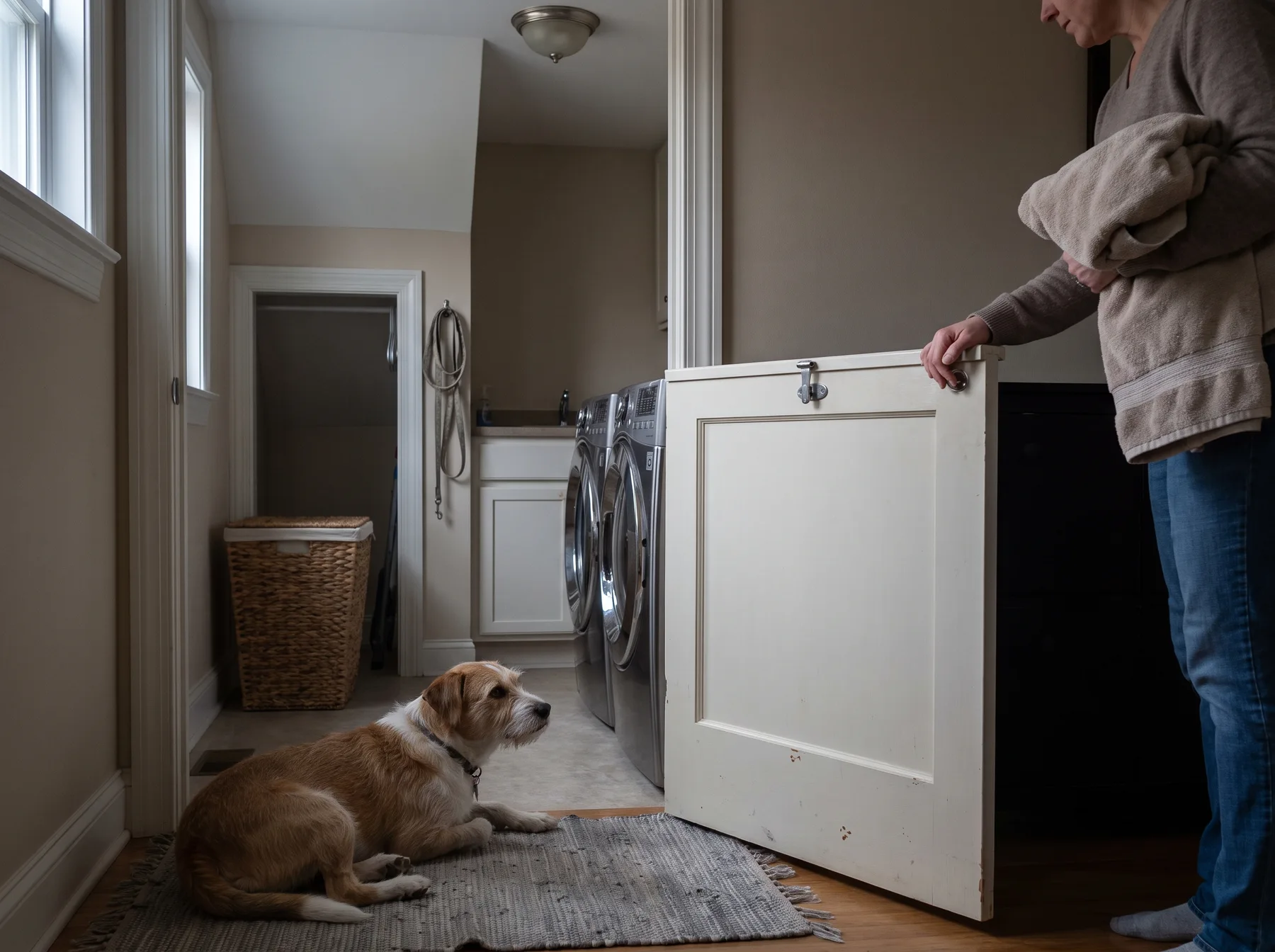
A laundry room can look like a small, low-priority part of dog-proofing your home. For a new or recently adopted dog, though, it often contains strong smells, chewable fabric, open machines, floor-level chemicals, and interesting items dropped from pockets. Even a dog who has never gotten into things before may investigate when settling into an unfamiliar home.
Learning how to dog proof a laundry room starts with a practical choice: decide whether your dog should be kept out entirely, allowed in only while you are present, or able to share the space with reliable safeguards in place. The safest setup is the one your household can maintain on an ordinary busy day.
Start here: choose the right access level for your dog
There is no need to give a new dog access to every room immediately. Restricting a laundry area is often a sensible temporary or permanent choice, especially if it doubles as a mudroom, utility closet, or storage space.
Make the laundry room off-limits
Choose full restriction if your dog:
- Is new to your home and still learning household routines
- Has a history of chewing, scavenging, counter surfing, or swallowing non-food objects
- Is a puppy, adolescent, or small dog who can fit into tight spaces
- Is highly interested in hampers, trash, socks, or cleaning supplies
- Will be home unsupervised while laundry is accessible
Use a securely latched door whenever possible. A properly installed gate can work for a wider doorway, but assess whether your dog can jump, climb, push it over, or squeeze around it. A gate is a boundary, not a substitute for safe storage.
Use the room as a gated work area
A gated laundry room may suit a dog who can settle nearby while you sort or fold clothes but should not walk among appliances and supplies. This can be useful in an open-plan home where closing a door is not an option.
Place a dog bed, mat, or chew approved for your dog outside the gate. Reward calm waiting rather than repeatedly correcting attempts to enter. For a newly adopted dog, this is also a helpful way to build predictable boundaries without asking for too much freedom too soon.
Allow supervised shared access
Shared access requires more than being in the room with your dog. It means the floor is clear, appliance doors are shut when not actively loading, chemicals are secured, and you can intervene right away if your dog finds something unsafe.
This option may work for an adult dog with a known history of leaving household items alone. Still, reassess after a move, adoption, schedule change, or other disruption. A dog's behavior can change as they become more comfortable in a new environment.
How to dog proof a laundry room: do a floor-to-ceiling walkthrough
Before your dog enters the space, stand at their eye level and look for what they can reach, pull down, chew, lick, or crawl into. Then check higher surfaces for items that could fall if bumped.
Check doors, gaps, and access points
Confirm that the door closes and latches securely. If you use a gate, inspect it regularly for loose hardware and choose a height and design appropriate for your dog's size and agility.
Look behind and beside the washer and dryer for gaps. Dogs may be drawn to a toy, sock, or food item that rolls behind an appliance. Block narrow spaces only if doing so does not interfere with appliance ventilation, hookups, or safe maintenance. If you cannot safely block an area, prevent room access.
Keep exterior or garage-entry doors closed so your dog cannot slip outside during laundry tasks. In homes where the laundry room connects to a garage, also store automotive products and tools elsewhere or in locked cabinets.
Clear everything at floor level
Floor-level clutter is the most immediate risk. Pick up loose garments, empty detergent caps, cleaning cloths, lint, hangers, coins, batteries, and anything emptied from pockets.
Do not leave a laundry basket full of clean or dirty clothes on the floor if your dog is inclined to pull items out. One missing sock may be easy to overlook until it causes a problem later.
Examine hampers and trash
Use a sturdy hamper with a fitted lid, or keep the hamper inside a closed closet or cabinet. Mesh hampers, open baskets, and soft fabric bags are easy for many dogs to raid or tear.
A lidded trash can helps, but it should not be considered dog-proof if your dog can nose it open or knock it over. Keep the trash in a latched cabinet or remove it from the room. Laundry trash may contain used dryer sheets, stain-remover wipes, empty chemical containers, lint, loose fasteners, and pocket debris.
Secure laundry chemicals before anything else
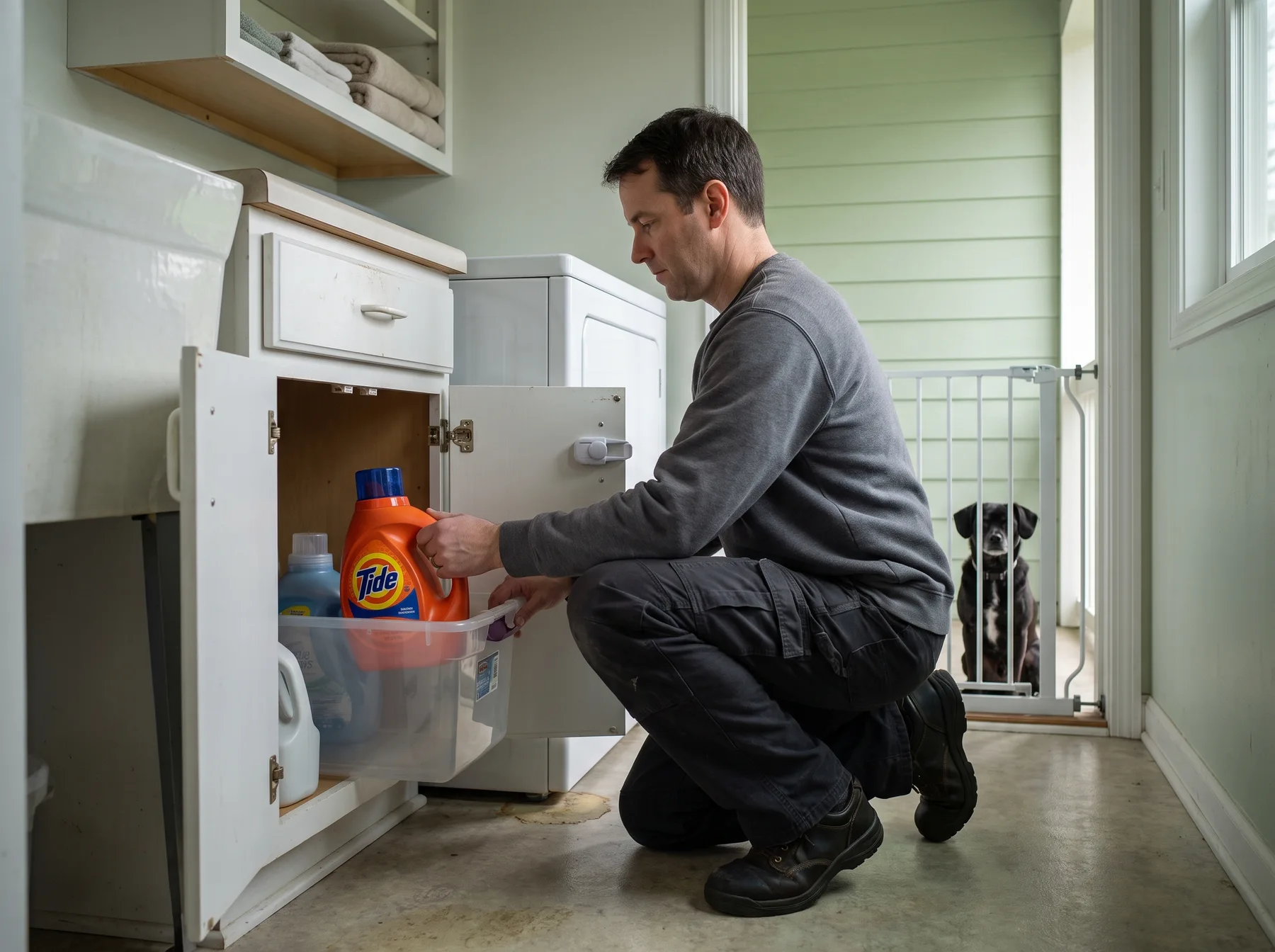
Laundry products should stay in their original labeled containers and be stored in a closed cabinet, ideally one with a child-resistant latch. Keep them high enough that your dog cannot reach them if a cabinet is left open, but do not depend on height alone. Dogs can jump, climb, or pull items down.
Prioritize securing:
- Detergent pods and sheets
- Liquid and powdered detergent
- Bleach and color-safe bleach products
- Stain removers and pre-treatment sprays
- Fabric softener and scent boosters
- Dryer sheets
- Cleaning products kept near the washer or utility sink
Detergent pods can be particularly appealing because they are small, colorful, and soft. They can burst in a dog's mouth and may cause serious injury. Dryer sheets and some laundry additives can also be harmful if eaten.
Never transfer chemicals into food or drink containers, even if they have lids. A clearly labeled original container provides important information if an exposure occurs.
If you use an open shelf, treat it as display space for items that are harmless if knocked down, not a place for detergent or stain treatment. Store chemical products behind a closed, latched door.
Remove tempting non-food items
Dogs do not distinguish between a favorite toy and a rolled-up sock, padded bra, washcloth, or underwear. Soft laundry items can be especially risky because they are easy to grab and may be swallowed in pieces or whole.
Keep these out of reach:
- Socks, underwear, tights, and small children's clothing
- Washcloths, dish towels, and cleaning rags
- Loose buttons, safety pins, needles, and sewing supplies
- Dryer balls, clothespins, and hangers
- Lint from the dryer filter
- Coins, gum, medication, nicotine products, or food wrappers from pockets
Empty pockets before clothes reach the hamper whenever you can. If that is not realistic for every household member, make pocket checks part of the laundry routine before sorting and loading each load.
Lint may look harmless, but it can contain hair, fibers, and residue from laundry products. Dispose of it in a covered trash container right away rather than setting it on top of the dryer.
Make washer and dryer use safer
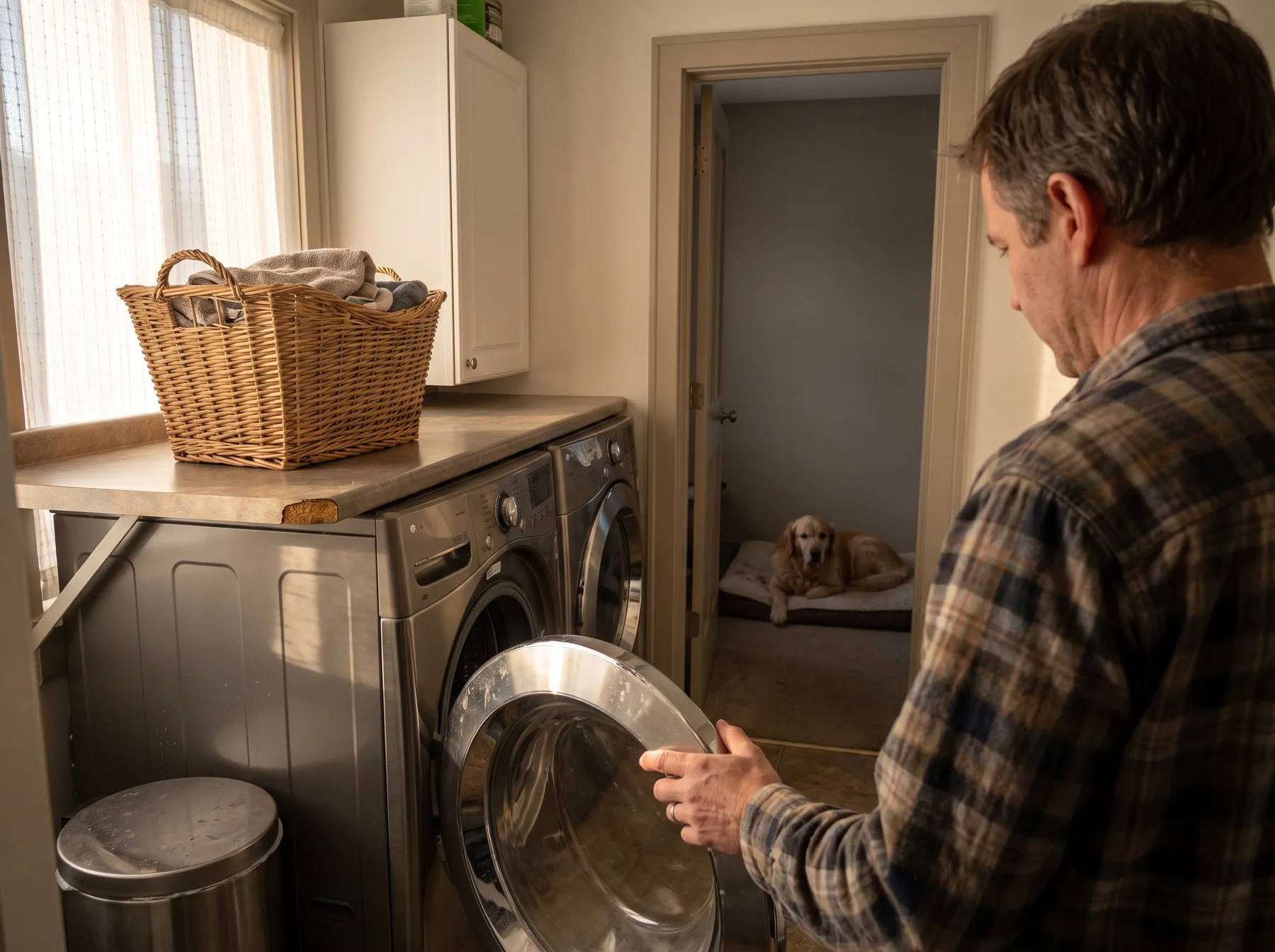
Washer and dryer drums can be dark, enclosed spaces that some dogs investigate, particularly if warm clothes or familiar scents are inside. Never assume your dog would not climb in.
Keep appliance doors closed whenever you are not actively loading or unloading. This simple habit matters even in a room your dog usually cannot access, since doors and gates can be left open by another person.
Before starting either appliance, look inside the drum. Do this every time, even if you believe your dog was elsewhere. Check for a dog as well as stray items that should not be washed or dried.
During loading and unloading, use a gate, close the room door, tether your dog only under direct supervision if appropriate, or provide a settled activity outside the work area. Avoid trying to manage an eager dog with one hand while carrying a laundry basket with the other.
Do not leave appliance doors propped open for ventilation if your dog has access to the room. Follow your appliance manufacturer's cleaning and ventilation guidance while keeping the room inaccessible.
Build storage that works in a rental, small home, or utility closet
A safer setup does not require a full remodel. The goal is to create a closed-storage system that is easy to reset.
For renters
Start with changes that do not permanently alter cabinets or walls:
- Keep detergent and stain treatments in a lidded, sturdy bin placed inside a closed cabinet or high closet
- Use removable cabinet latches only according to their instructions and your lease terms
- Move hampers and laundry trash to a closet with a closing door if the laundry nook has no storage
- Use a pressure-mounted gate only where it can be installed securely and does not block a required exit
Avoid blocking electrical panels, dryer vents, shutoff valves, or access needed for appliance service.
For compact laundry closets
Small spaces tend to become catch-all storage. Keep only laundry essentials in the closet. Find another home for pet food, treats, medications, household cleaners, tools, and bags.
Use closed containers that fit the shelf depth and return each item to the same place. A bin is useful only when its lid is consistently replaced and the bin itself stays inaccessible to your dog.
For homes with lower cabinets
Install appropriate latches on cabinets holding chemicals, trash, or small items. Test each latch after installation. Then practice using it until closing the cabinet becomes automatic, including when you are interrupted.
Create a simple laundry-day reset
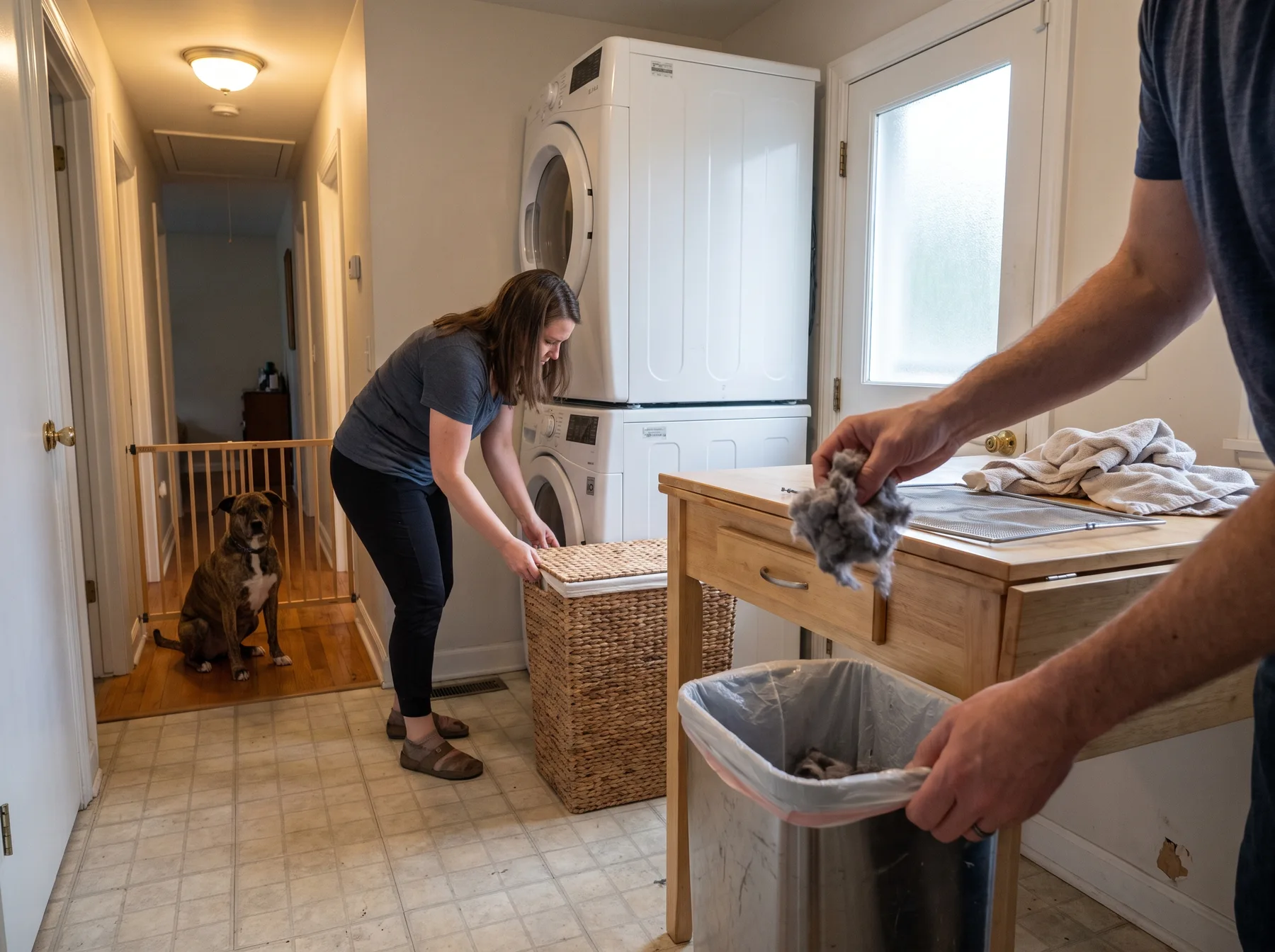
Dog-proofing is not a one-time project. It works best as a short routine shared by everyone who uses the room, including older children, visitors, and pet sitters.
Before starting a load:
- Put your dog behind the closed door or gate, or set them up in a safe area nearby.
- Pick up clothing, pocket contents, lint, and supplies from the floor and appliance tops.
- Return detergents and treatments to their closed storage after measuring them.
- Close the hamper, secure the trash, and close cabinet doors.
- Look inside the washer and dryer before turning either machine on.
After folding:
- Count or quickly check small items if your dog commonly steals socks or underwear.
- Put away loose buttons, hangers, and laundry accessories.
- Empty lint directly into secured trash.
- Check behind baskets and appliances for dropped items.
- Close the room or reset the gate before leaving.
Teach children a simple rule: laundry products and machines are not for dogs to investigate or play around. Instead of placing responsibility on a child to monitor the dog, make storage and access control the adult-managed safety system.
If your dog mouths or swallows a laundry item or product
Stay calm and prevent further access. If it is safe to do so, remove remaining product or objects from within reach, but do not put your fingers into your dog's mouth if they may bite or if the object is already far back.
Save the packaging or take a clear photo of the label, including the ingredient list if available. Note what your dog may have eaten, approximately how much, and when it happened.
Contact your veterinarian, an emergency veterinary clinic, or a pet poison expert promptly for guidance. Do not induce vomiting or give home remedies unless a veterinary professional specifically tells you to do so. Some substances and objects can cause additional harm if vomiting occurs.
Seek urgent veterinary care if your dog has trouble breathing, repeated vomiting, severe drooling, weakness, collapse, seizures, significant mouth irritation, abdominal discomfort, or is unable to keep water down. A swallowed sock, cloth, or other fabric item can create an intestinal blockage even if your dog initially seems normal.
Join the conversation
0 comments
Leave a comment
Your email address will not be published. Comments are reviewed before appearing.