
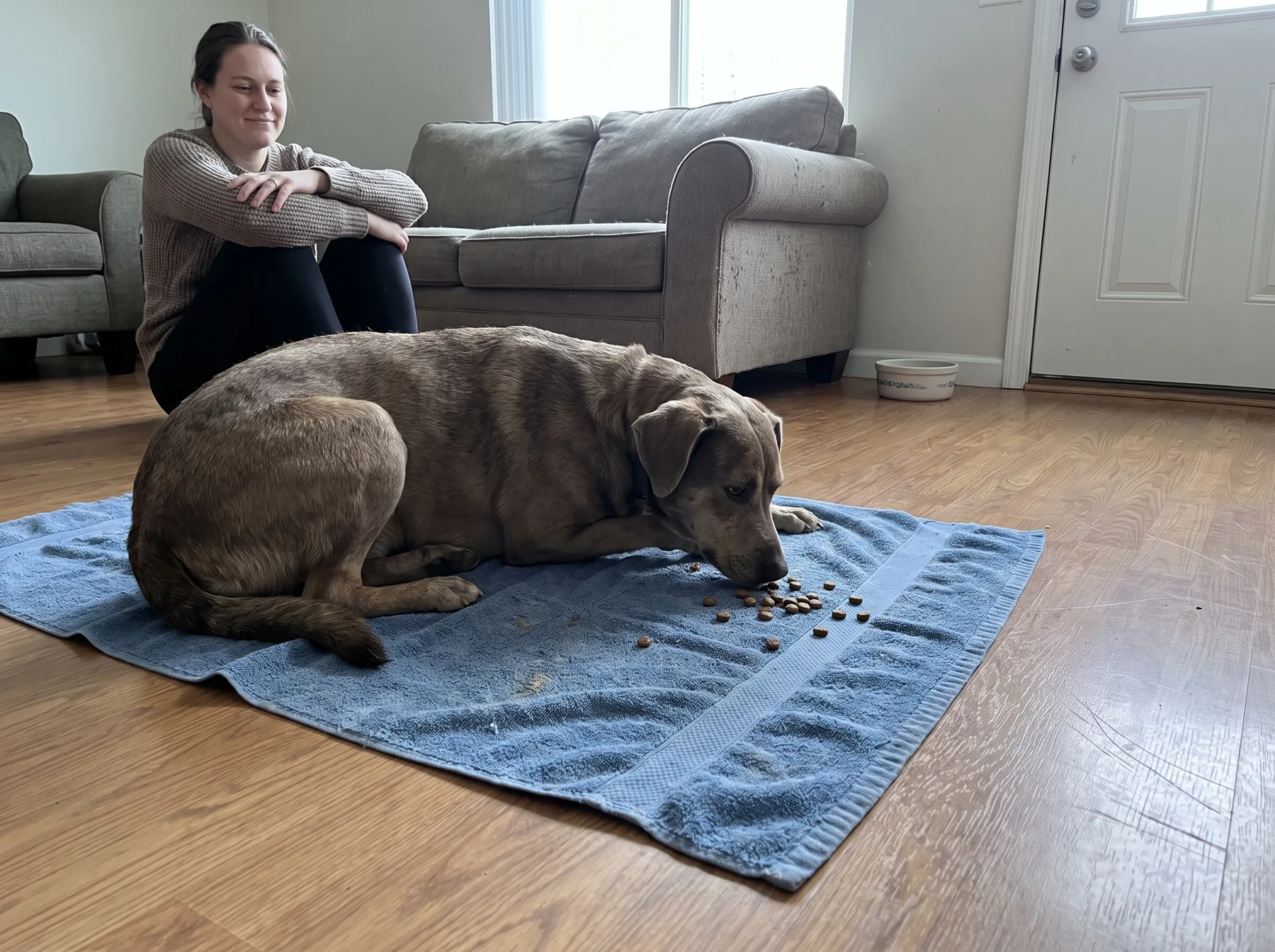
A newly adopted dog may not be ready for a complicated puzzle, a busy outing, or formal training sessions. They may still be learning where to rest, who lives in the home, and whether everyday sounds are safe. A find it game for dogs can be a calm way to offer enrichment indoors because it lets the dog use their nose at their own pace.
The first version should be almost comically easy. Your goal is not to test your dog or teach a perfect cue. It is to help them notice that sniffing around your home can lead to something pleasant. Begin with food your dog can plainly see, then make searches harder only when they are eagerly participating.
This progression works for many adult rescue dogs, adolescent dogs, and puppies, but adjust it for your dog’s diet, mobility, history, and comfort level. If food causes conflict with another pet, or your dog becomes distressed around handling, space, or objects, choose a simpler setup or get individualized help before continuing.
What “find it” means, and why a new dog should start easy
“Find it” is a simple cue that tells your dog there is something worth sniffing out nearby. In early sessions, that something is usually a piece of kibble or a small treat. Over time, the dog learns to lower their nose, search an area, and persist briefly until they locate the food.
For a dog who has just arrived home, a visible scatter is often more useful than hiding treats under furniture or asking them to solve a toy immediately. An easy win can:
- Give the dog a quiet, predictable activity.
- Redirect attention during a mild household distraction, such as someone unloading groceries.
- Create positive associations with a room, mat, or calm family routine.
- Provide a small amount of mental activity when outdoor exercise is limited by weather, recovery, or a settling-in period.
This is not a replacement for walks, veterinary care, sleep, or thoughtful training. It is one low-demand option for a dog who needs time to decompress.
Before you begin: set up a quiet, dog-proofed search space
Choose one familiar room with a clear floor. A kitchen, living room, or bedroom can work if you can remove hazards and limit interruptions. Start when the dog is awake but not already overexcited, hungry to the point of distress, or trying to rest.
Check the area for dropped medication, children’s small toys, cords, trash, toxic houseplants, laundry items, and food that is unsafe for dogs. If you use the laundry room, take extra care with detergent pods, dryer sheets, loose socks, and open appliances. A room-by-room safety routine, including a dog-proof laundry room checklist, can make indoor games less risky.
Keep the first sessions brief. For many dogs, 30 seconds to two minutes is plenty. End while your dog is still interested, then let them return to resting, chewing an appropriate item, or simply relaxing.
Pick rewards that fit your dog’s diet and budget
Use part of your dog’s regular meal when possible. Measure out a small portion of kibble before feeding, then use that amount for the game. This avoids accidentally adding a large number of calories during a period when you are still learning your dog’s ideal intake.
If kibble is not interesting enough, use pea-sized pieces of an approved, higher-value food. Consider your dog’s known allergies, prescription diet, sensitive stomach, dental needs, and swallowing habits. Avoid foods that are unsafe for dogs, including chocolate, grapes and raisins, onions, garlic, xylitol-containing products, and cooked bones.
For dogs who need a strict diet, ask your veterinarian what rewards fit their plan. You can also make the activity easier by scattering a small portion of their regular meal rather than relying on treats.
Level 1: visible treat scatter on a clear floor or towel
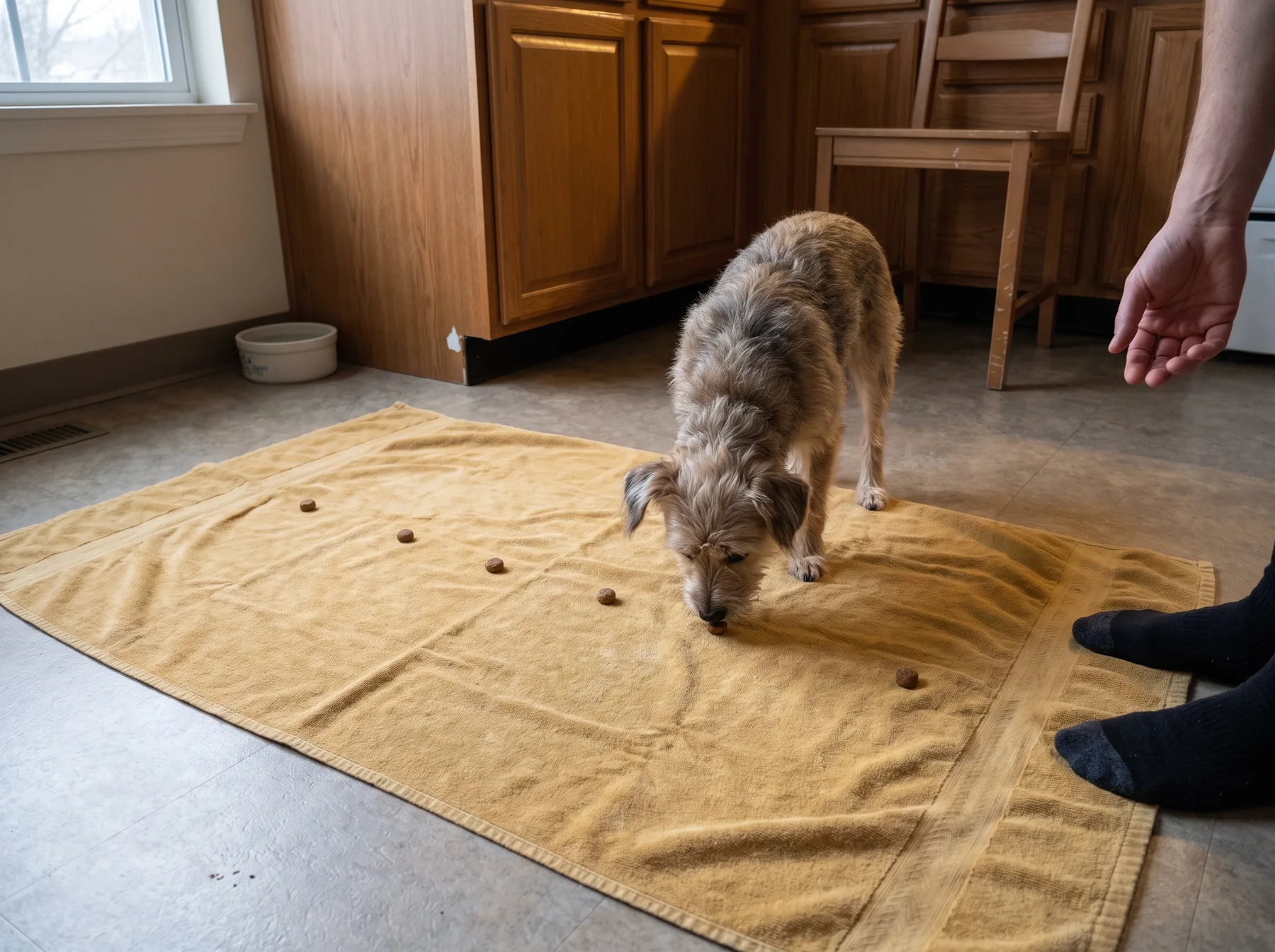
This is the foundation of the find it game for dogs. Stand or sit a few feet from your dog and gently scatter three to five pieces of food on a clear, non-slip floor. Let them watch the food land. You may say “find it” once as you scatter, but the cue is optional at first. The visible food explains the game.
Wait quietly while your dog picks up the pieces. There is no need to point repeatedly, praise loudly, or hurry them along. A dog who sniffs, eats, and looks ready for another round is doing exactly what you want.
If your floor is slippery, scatter food on a flat towel instead. A towel can also help define the activity area in a small apartment. Keep it fully spread out for now. Do not fold or bunch it into a snuffle-style challenge until your dog understands the basic game and can move comfortably.
Try one or two small scatters, then stop. Repeat later in the day if your dog enjoyed it.
Level 2: a one-step “find it” toss in the same room
Once your dog readily searches for visible scattered food, move to a single, easy toss. With your dog watching, toss one piece of food a few feet away onto an open floor. Say “find it” as it lands or just before you toss it.
The food should remain easy to see and reach. The purpose is to connect the words with a simple action: look down, sniff, and collect the reward.
As your dog catches on, vary the direction slightly. Toss to the left, then the right, but avoid making them race. Dogs with arthritis, recent surgery, poor coordination, or mobility limitations may do best with very short, gentle tosses on a secure surface. For them, place the food instead of tossing it if sudden movement is uncomfortable.
Do not ask the dog to stay while you hide food at this stage. A newly adopted dog may not know that cue, and waiting can make a relaxed game feel like a test.
Level 3: simple open-container searches while your dog watches
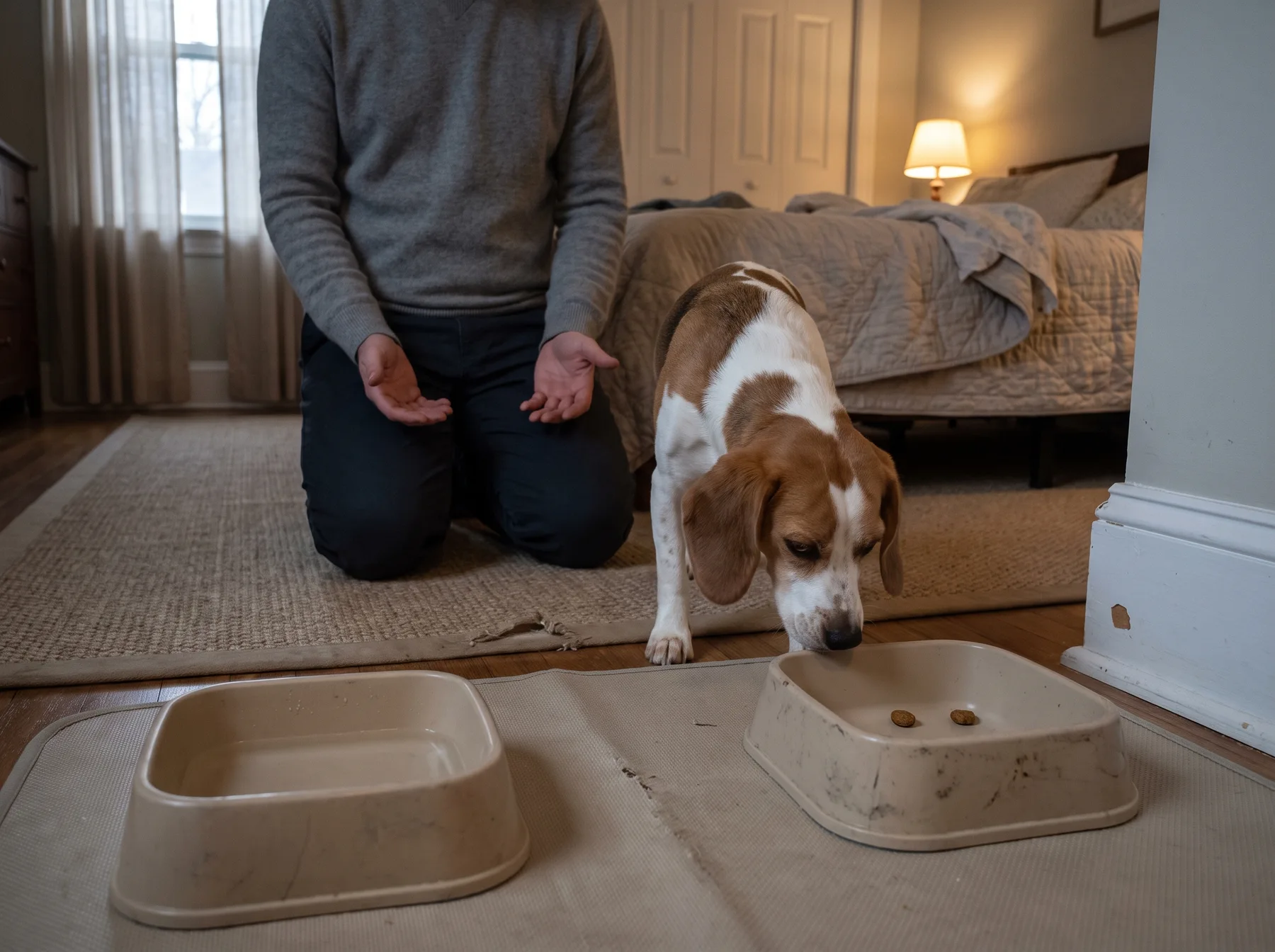
Next, let your dog watch you place food in an open, stable container. A shallow bowl, low-sided cardboard tray, or wide plastic container can work. Put the container on the floor and drop in one or two pieces of food. Then say “find it” and let your dog approach.
When your dog reliably checks the container, set a second open container a few feet away and place food in only one. Keep the empty container truly empty and easy to inspect. Let your dog investigate both without correcting them.
At this level, the searching challenge is minimal. Your dog is learning that checking objects can be worthwhile. Use containers that cannot trap a muzzle, pinch toes, tip easily, or splinter. Remove them after the session so the dog does not chew or carry them off unsupervised.
If your dog paws frantically, grabs the container, or starts chewing it, return to floor scatters or use a sturdier, safer option. A supervised treat puzzle toy may be useful later for dogs who enjoy food-based enrichment, but choose a size and difficulty that matches your dog and introduce it as gradually as any other new object.
Level 4: easy box searches after your dog understands the game
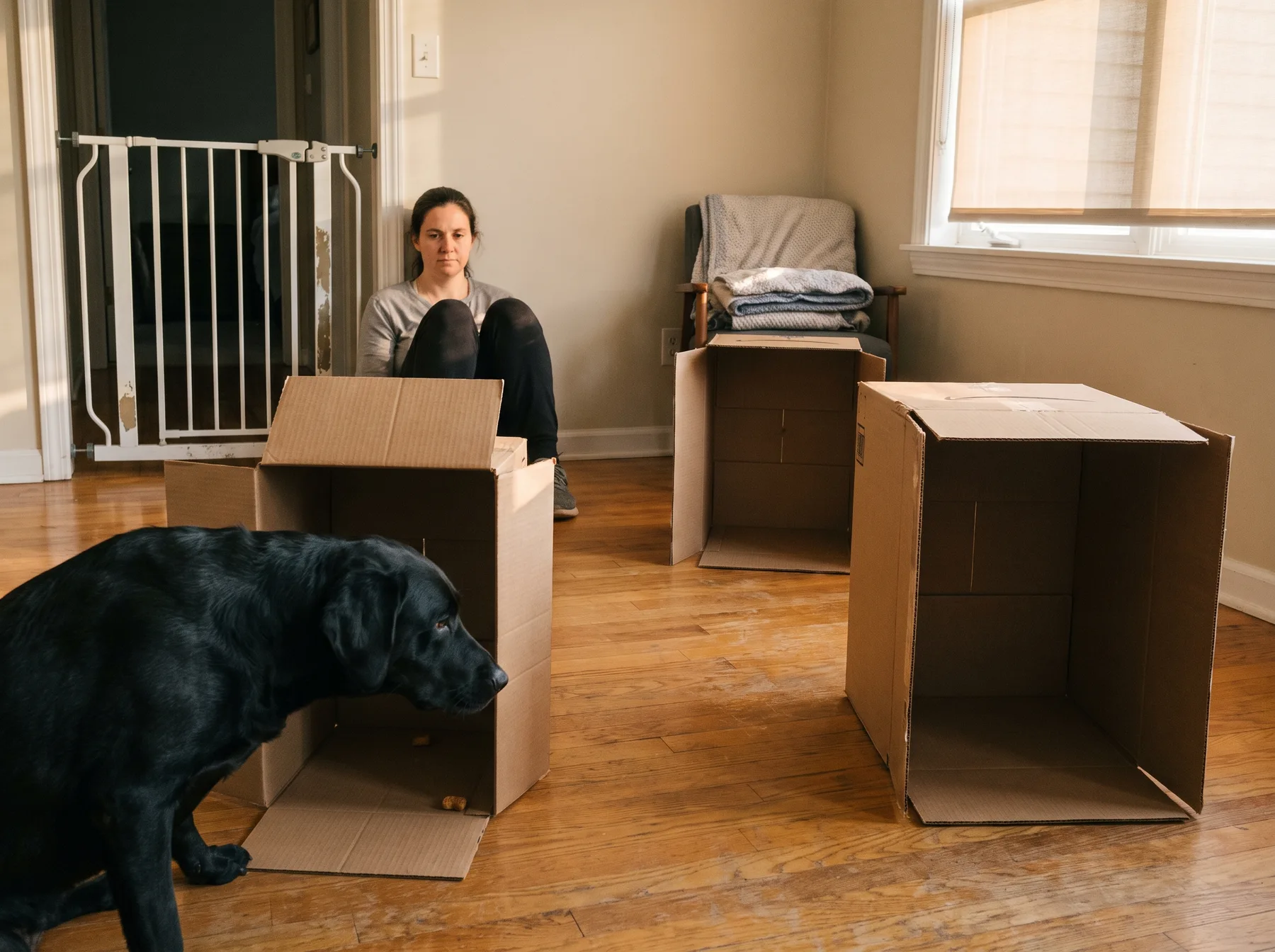
Only add boxes when your dog comfortably investigates open containers and has not tried to eat cardboard. Set out two or three open boxes or paper bags with handles removed. Let your dog watch as you place a treat in one box. Say “find it,” then give them space to investigate.
Keep the boxes upright and the food visible near the opening at first. You can later place the food just inside, still in plain reach. Avoid closing flaps, nesting boxes, or placing food beneath paper until your dog is confidently searching and calmly interacting with the materials.
A dog does not need to become a box-search expert for this activity to be valuable. Some dogs prefer simple scatters for life, and that is completely fine. The best level is the one your dog can do safely with relaxed interest.
How to choose difficulty: green, yellow, and red lights
Watch your dog rather than following a fixed schedule. One dog may move through several levels in a week. Another may need several weeks of level 1, particularly after a major transition.
Green light: make one small change
Your dog eagerly approaches the game area, sniffs with a loose body, finds most of the food without help, and remains interested without becoming frantic. You can change one thing at the next session: add one more piece of food, increase the toss by a foot, or introduce a second open container.
Yellow light: simplify and observe
Your dog hesitates, wanders off, seems confused, starts scanning you for instructions, or loses interest after one attempt. Make the next round easier. Use more visible food, fewer objects, and a quieter room. Also consider whether the reward is unfamiliar, the dog is tired, or the session came too soon after a stressful event.
Red light: stop the session
Pause if your dog freezes, repeatedly refuses food they normally like, pants heavily in a cool room, tries to escape, guards food or containers, snaps, swallows nonfood items, or becomes intensely frantic. Calmly remove the materials and give the dog space. Do not punish or force them to continue.
Refusal of food can happen for ordinary reasons, but it can also be a sign of illness, pain, nausea, or stress. Contact your veterinarian promptly if appetite changes are persistent, sudden, or paired with vomiting, diarrhea, lethargy, pain, or other concerning symptoms.
Common setbacks and practical adjustments
My dog is not interested in the food
Start by offering one piece from your hand to confirm the dog wants it. If they decline it, do not pressure them to play. Try again at another calm time with part of a meal or a veterinarian-approved alternative. Newly adopted dogs commonly need time before they feel comfortable eating or playing in a new space.
My dog rushes and seems overexcited
Use fewer pieces, spread them farther apart, and keep the search area small. You can also place food one piece at a time instead of scattering it. If the dog cannot settle enough to search safely, choose a quiet rest break rather than increasing difficulty.
My dog grabs or destroys containers
Containers are optional. Return to floor scatters or use a flat towel under direct supervision. Chewing and grabbing may mean the material is too exciting, the dog does not understand the task yet, or the activity has become frustrating.
We have more than one dog
Run separate sessions behind a closed door, baby gate, or other secure barrier. Food searches can create tension even between dogs who usually get along. Do not expect dogs to share boxes, towels, or scattered treats. Give each dog their own calm space.
My dog has mobility limits or impaired vision
Use a consistent, uncluttered area and place food within easy walking distance. Choose larger, smellier pieces if your veterinarian has approved them. Avoid slippery floors, raised surfaces, narrow spaces, and any setup that requires quick turns or bending into containers. A veterinarian can help you choose appropriate activity limits for a dog recovering from injury or living with chronic pain.
When to ask for professional help
A simple sniffing game should feel low pressure. Stop and seek support if your dog guards food, stiffens or growls around people near food, has a history of bites, panics around common household objects, or cannot safely engage because of severe anxiety or destructive ingestion.
For medical concerns, appetite changes, swallowing hazards, pain, or digestive issues, contact your veterinarian. For fear, guarding, or other behavior concerns, look for a qualified, reward-based trainer or behavior professional with experience in humane behavior modification. They can help you set up enrichment that respects your dog’s comfort and keeps everyone in the home safe.
For now, keep the game easy enough that your new dog can succeed. A few visible pieces of kibble on a clear floor may not look advanced, but for a dog learning that home is safe, it can be exactly the right place to begin.
Join the conversation
0 comments
Leave a comment
Your email address will not be published. Comments are reviewed before appearing.