
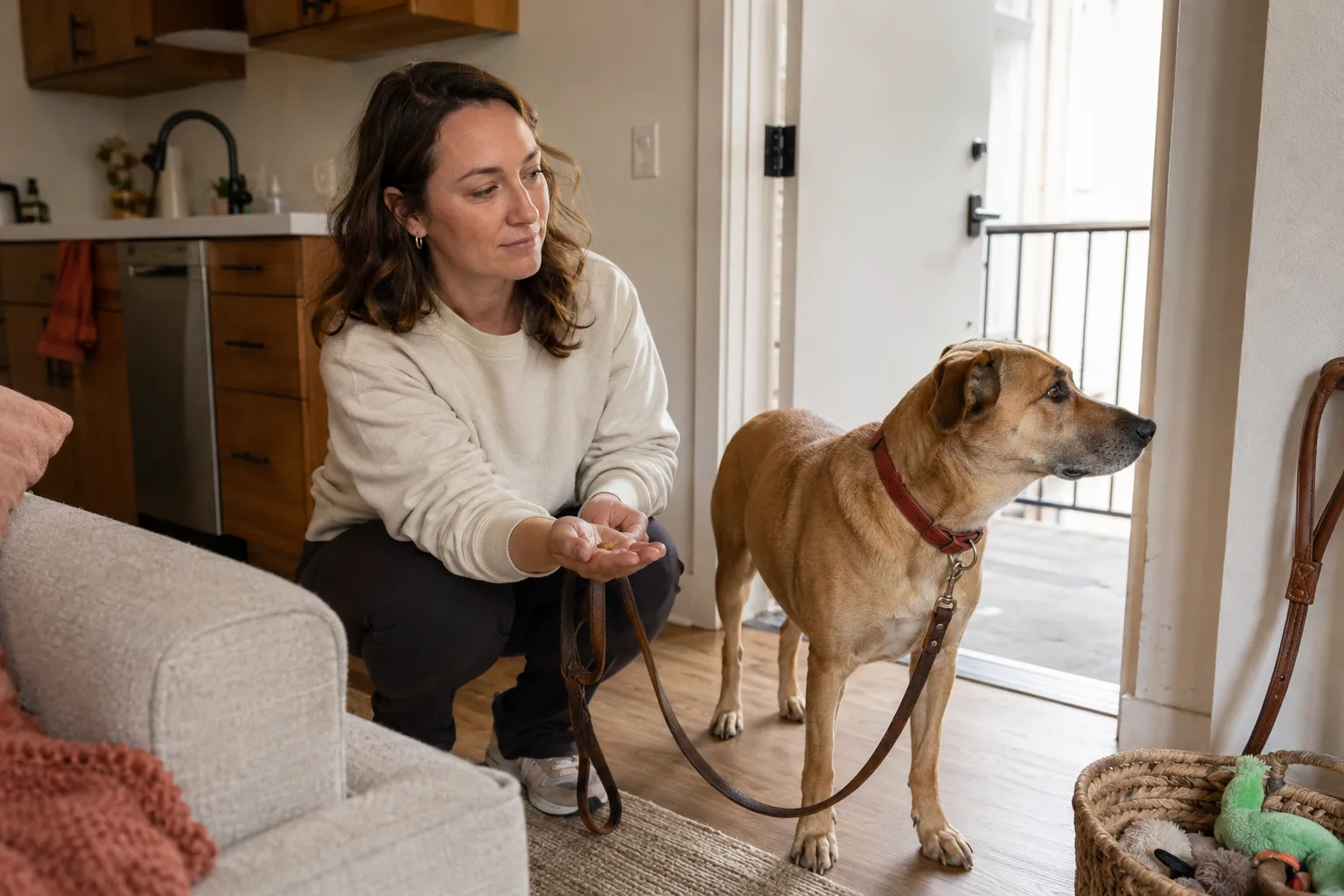
Your new dog eats chicken in the kitchen but turns away from it as soon as you step outside. They may sniff the treat and drop it, clamp their mouth shut, or seem not to notice your hand at all.
If your dog won't take treats outside, treat that refusal as information rather than disobedience. Eating can become difficult when a dog is worried, highly alert, motion sick, physically uncomfortable, or absorbed by smells and movement. Refusing food does not tell you the exact reason, but it does tell you that the current situation may be too difficult for food-based training.
A five-location check can help you find the point where eating stops. From there, you can practice in an easier place instead of withholding meals, repeatedly offering richer food, or pushing your dog farther into an overwhelming environment.
First check: Is your dog eating normally at home?
Before treating this as an outdoor training issue, look at your dog's overall appetite and health.
Notice whether your dog:
- Eats normal meals in a familiar indoor space
- Drinks an appropriate amount of water
- Accepts favorite foods at home
- Chews and swallows without difficulty
- Has normal energy, stool, and urination for that dog
- Shows vomiting, diarrhea, drooling, coughing, gagging, or signs of pain
Contact your veterinarian if your dog is refusing meals as well as treats, has a sudden appetite change, seems lethargic or painful, repeatedly vomits, has ongoing diarrhea, or cannot keep water down. Puppies, very small dogs, seniors, and dogs with known medical conditions may need prompt guidance because missed meals can affect them differently.
A recently adopted dog may eat lightly during the first days in a new home, but appetite loss should not automatically be attributed to adjustment. Call your veterinary clinic if you are uncertain about how long it is safe for your particular dog to go without eating.
If your dog eats comfortably at home and refusal happens only near or outside the door, continue with the location check.
What treat refusal can tell you about stress and distraction
Dogs do not all stop eating at the same emotional intensity. One dog may accept food while nervous, while another cannot eat as soon as a car passes. Treat refusal is therefore a personal clue, not a universal stress test.
Common explanations include:
- Concern about the environment: Traffic, unfamiliar people, dogs, construction, wind, open spaces, or a previous frightening event may make the dog vigilant.
- Competing smells and sights: Grass, wildlife, food scraps, other dogs, and moving objects can be more relevant than food.
- High excitement: A dog eager to explore may be too activated to pause and eat, even if the emotion is not primarily fear.
- Physical discomfort: Heat, cold, nausea, dental pain, orthopedic discomfort, or poorly fitting walking equipment can affect behavior and appetite.
- Difficulty eating while moving: Some dogs need to stop, orient, and feel secure before they can chew.
- A reward mismatch: Dry biscuits may not matter much outside, although continually escalating to richer treats will not solve an environment that feels unsafe.
Look at the whole dog. A tucked tail, lowered body, trembling, scanning, panting when it is not hot, repeated attempts to go home, freezing, or pulling away suggests that reducing pressure is appropriate. A loose body, active sniffing, and an ability to respond to the environment may point more toward competing interests.
Either way, the first adjustment is similar: make the task easier.
The five-location test when your dog won't take treats outside
Use the same small, familiar food at each location so that you are mainly testing the setting, not comparing different treats. Choose a time when your dog would normally be willing to eat, but do not skip or delay meals to create hunger.
Offer one or two pea-sized pieces at each stage. Give your dog several seconds to notice the food. Do not push it into their mouth or repeatedly place it against their nose.
Record whether your dog:
- Eats promptly
- Eats after pausing
- Takes the food and drops it
- Sniffs and turns away
- Cannot orient toward you or the food
Stop when you reach the first location where eating becomes difficult. There is no need to complete all five steps in one session.
1. Living room or another comfortable indoor area
Begin in a quiet room where your dog regularly relaxes. Offer a familiar treat from your open hand, or place it on the floor if reaching toward the dog causes hesitation.
If your dog will not eat here, end the test. Consider recent meals, digestive upset, pain, fatigue, and other health changes. If refusal is unusual or continues, consult your veterinarian.
If your dog eats easily, move to the next location after a brief pause.
2. Open doorway while remaining indoors
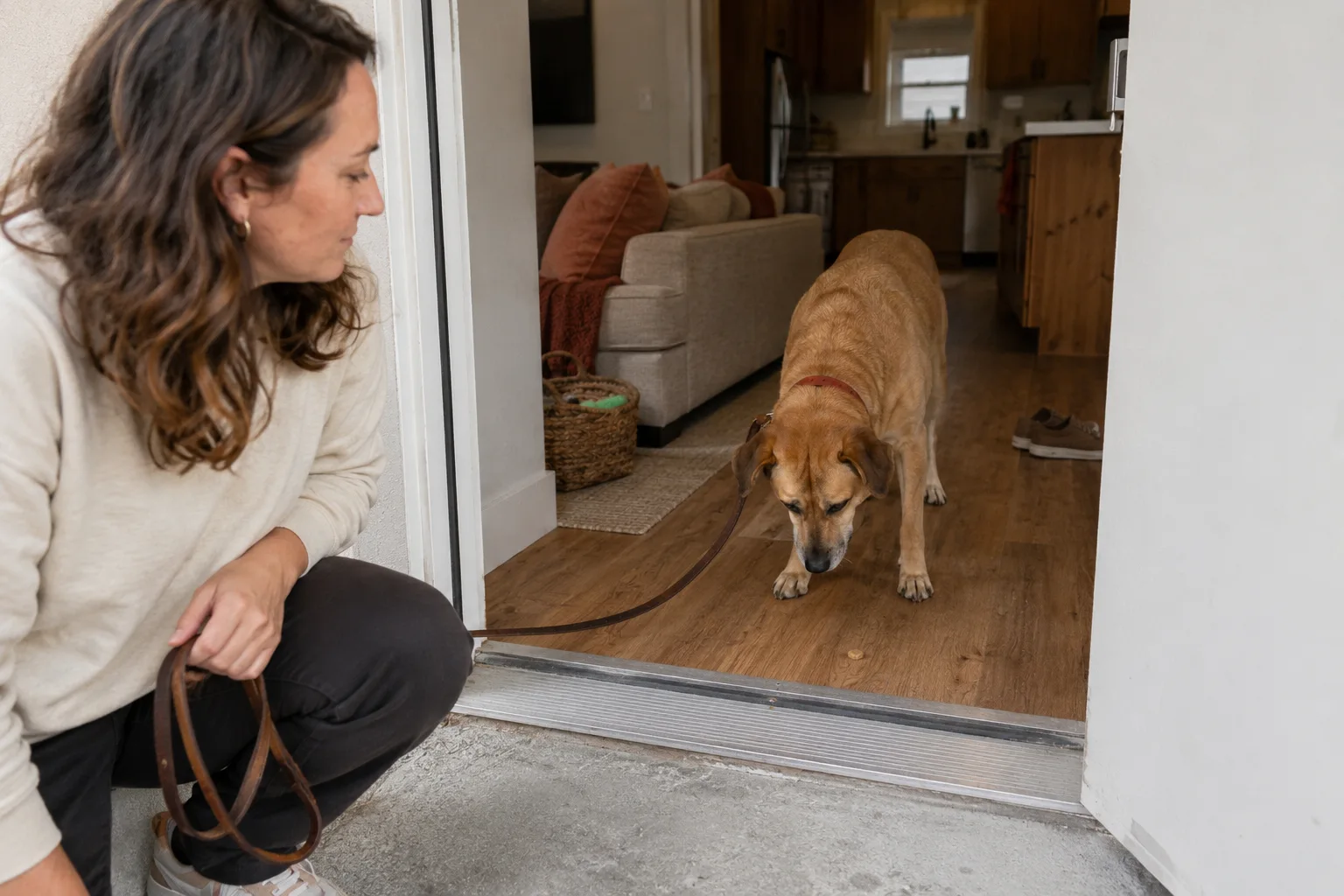
Open the exterior door while keeping your dog several feet inside. Use a leash if there is any chance of escape, but avoid pulling the dog toward the opening.
Doors can predict noise, unfamiliar people, or a difficult walk. A dog who eats with the door closed but stops when it opens may need practice at a greater distance from the doorway.
If eating stops, close the door or move farther into the room. That retreat is useful feedback, not a failed session.
3. Doorstep or building exit
Stand just outside the door, in the hallway, on the porch, or near the building exit. Keep the visit brief. In an apartment, account for elevators, stairwells, narrow corridors, and neighbors appearing suddenly.
Some dogs can eat by an open door but not once all four paws cross the threshold. Others eat until the door closes behind them. Note the exact change.
4. Quiet outdoor spot
Choose the calmest practical outdoor area available, not necessarily the place where you usually walk. Possibilities include a sheltered yard corner, a quiet patch near your building, or a low-traffic sidewalk during a calm time of day.
Allow your dog to look and sniff before offering food. Standing still or turning your body slightly sideways may feel less demanding than facing the dog and asking for a cue.
If your dog eats here, you have found a possible outdoor practice area. If not, increase distance from traffic, people, dogs, or the building exit. You can also return to the indoor doorway stage.
5. Regular walking route
Test only after your dog can eat at one easier outdoor location. Walk a short distance onto the usual route, then pause in a place with as much space and visibility as possible.
The regular route may contain triggers that are absent near home, including barking dogs behind fences, buses, delivery carts, busy intersections, or places where your dog previously became frightened.
If food refusal returns, note where it happened and what was nearby. Turn back before your dog becomes more distressed. The goal is to map the difficulty, not persuade the dog to finish the route.
Find the easiest outdoor location where your dog can still eat
Your dog's working location is the easiest place that offers a small challenge without shutting down their ability to eat or disengage.
For one dog, that may be eight feet inside an open doorway. For another, it may be a quiet lawn at dawn. The correct starting point can change with weather, traffic, sleep, pain, and unexpected events.
Use these decision points:
- Eating promptly with a relatively loose body: Stay there or make one small increase in difficulty.
- Eating slowly while scanning: Add distance from activity or shorten the session.
- Taking food and dropping it: Treat this as hesitation. Make the setting easier.
- Refusing food or trying to leave: Retreat without asking for more behavior.
- Recovering once back inside: Plan the next session at or before the last successful location.
Do not use leash pressure to keep your dog near something they fear. Whenever safely possible, allowing retreat teaches the dog that communication works.
A short, lower-pressure outdoor practice routine
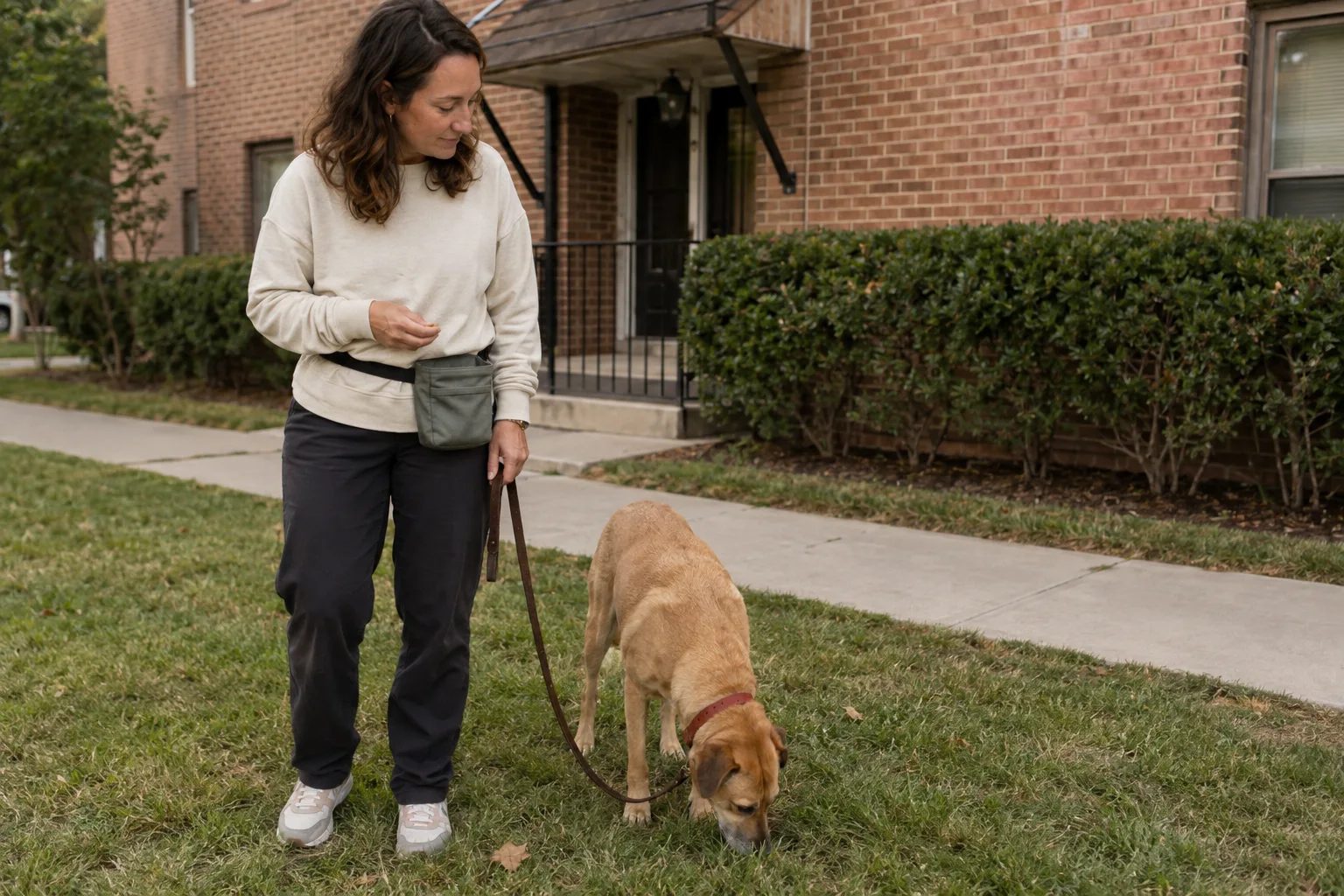
Keep early sessions to roughly two to five minutes. A short successful visit is more useful than a long walk filled with repeated refusals.
- Start at the easiest location where your dog reliably ate during the test.
- Pause and let your dog observe or sniff without requesting a sit, eye contact, or heel.
- Offer one tiny reward. If your dog eats, calmly offer another or scatter two pieces nearby.
- Move only a few feet closer to the next location or remain where you are.
- Watch for slower eating, a tighter body, scanning, freezing, or attempts to retreat.
- Return to the easier location while your dog can still respond.
- End the session with a calm trip indoors or to another safe area.
You might practice opening the door and feeding several feet inside for three days. Next, you might spend 20 seconds on the porch. Progress does not require moving farther every session. Repeating an easy version can build predictability.
Tiny, soft pieces are usually easier to chew quickly than large biscuits. A wearable dog training treat pouch can keep rewards accessible, but a jacket pocket or small washable container works too. Keep food separate from keys, waste bags, and anything unsafe to swallow.
Avoid turning treat refusal into a food contest
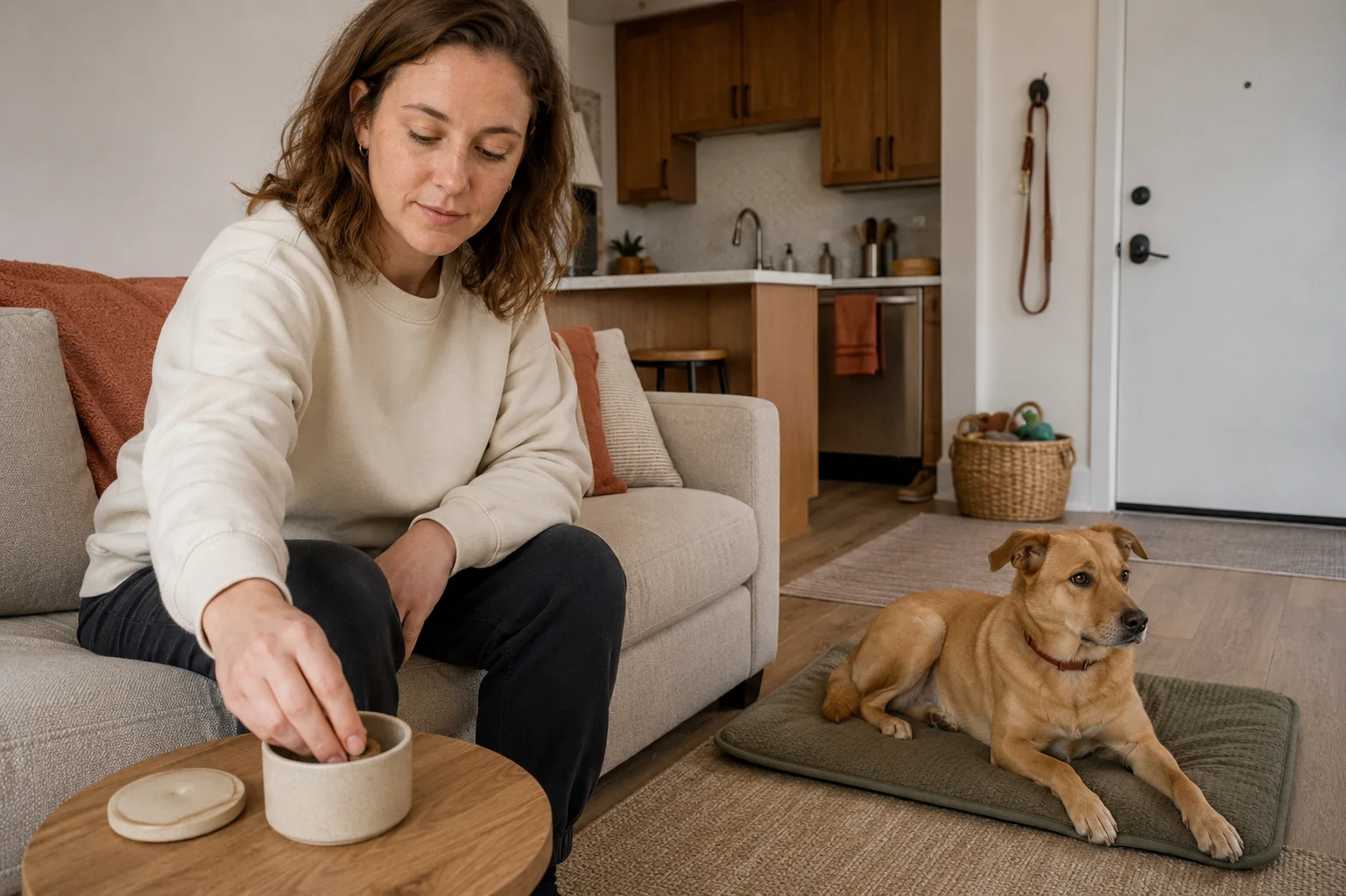
Trying chicken instead of kibble can clarify whether reward value matters, but there is a limit. If your dog refuses several foods they normally enjoy, the environment is probably the more important variable.
Avoid:
- Withholding meals so the dog will be hungry outdoors
- Holding food against the dog's nose
- Repeatedly cueing sit, look, or come after refusal
- Luring the dog toward a person, animal, vehicle, or place they are avoiding
- Staying outside until the dog finally eats
- Increasing treat richness without reducing environmental difficulty
Rich or fatty foods can also cause digestive upset, particularly when introduced suddenly. Account for training treats in your dog's daily food intake and ask your veterinarian about suitable options if your dog has allergies, digestive disease, or a prescription diet.
What if food is not motivating outside?
Food is convenient, but it is not the only possible reinforcement. What matters is whether the consequence is something your dog wants in that moment.
Permission to sniff
After your dog notices you or takes a step with you, release them to sniff a safe patch of grass. Sniffing can be both information gathering and a rewarding activity.
Do not use this near litter, toxic plants, lawn chemicals, or wildlife waste. Local leash rules still apply.
Movement away from pressure
For a worried dog, increasing distance from a barking dog, loud truck, or crowded corner may be more valuable than cheese. Mark a voluntary check-in with a calm word, then move away together.
Gentle movement or play
Some relaxed, playful dogs respond to a few quick steps, a hand target, or a brief tug with an appropriate toy. Skip energetic play if your dog appears frightened, is physically uncomfortable, or could become harder to manage near traffic.
Access to a safe place
Returning to the porch, car, lobby, or home can reinforce checking in and moving with you. Retreat does not reward fear. It can prevent the dog from becoming more overwhelmed and preserve trust.
Indoor skill building
Practice easy food games where your dog feels secure. The Find It game for dogs offers a gradual indoor progression that can build familiarity with searching for food before you try it near an open door.
Adjust expectations for your dog and neighborhood
A young puppy may be distracted by every leaf and sound. A newly adopted adult may need time to learn that the doorway and street are safe. A senior dog may hesitate because of steps, slippery surfaces, reduced vision, or joint discomfort.
Your setup also matters. A fenced yard in a quiet area presents a different challenge from an apartment elevator opening onto a busy city block. If the regular route is too intense, focus temporarily on necessary bathroom trips at quieter times. Provide appropriate indoor enrichment instead of insisting on long walks.
Dogs still need safe opportunities to eliminate and move their bodies, but exercise does not have to come from a crowded route. Adapt the plan to your dog's age, health, mobility, vaccination status, and local leash or property rules.
When to get veterinary or behavior support
Contact your veterinarian if appetite changes occur indoors, refusal is sudden, your dog shows signs of pain or illness, or outdoor hesitation could be related to mobility, vision, hearing, dental discomfort, or digestive problems.
Seek help from a qualified reward-based trainer or behavior professional if your dog:
- Panics, trembles, freezes, or repeatedly tries to escape
- Cannot complete necessary bathroom trips without severe distress
- Reacts strongly to people, dogs, traffic, or other common triggers
- Has bitten or may be at risk of biting
- Is becoming more fearful despite shorter, easier outings
- Cannot make progress beyond the doorway with a gradual plan
Choose a professional who uses reward-based methods, allows distance and retreat, and does not rely on intimidation, leash corrections, flooding, or claims about dominance. For intense fear, aggression, or complicated medical factors, your veterinarian can help you locate an appropriately qualified behavior professional.

Join the conversation
0 comments
Leave a comment
Your email address will not be published. Comments are reviewed before appearing.