
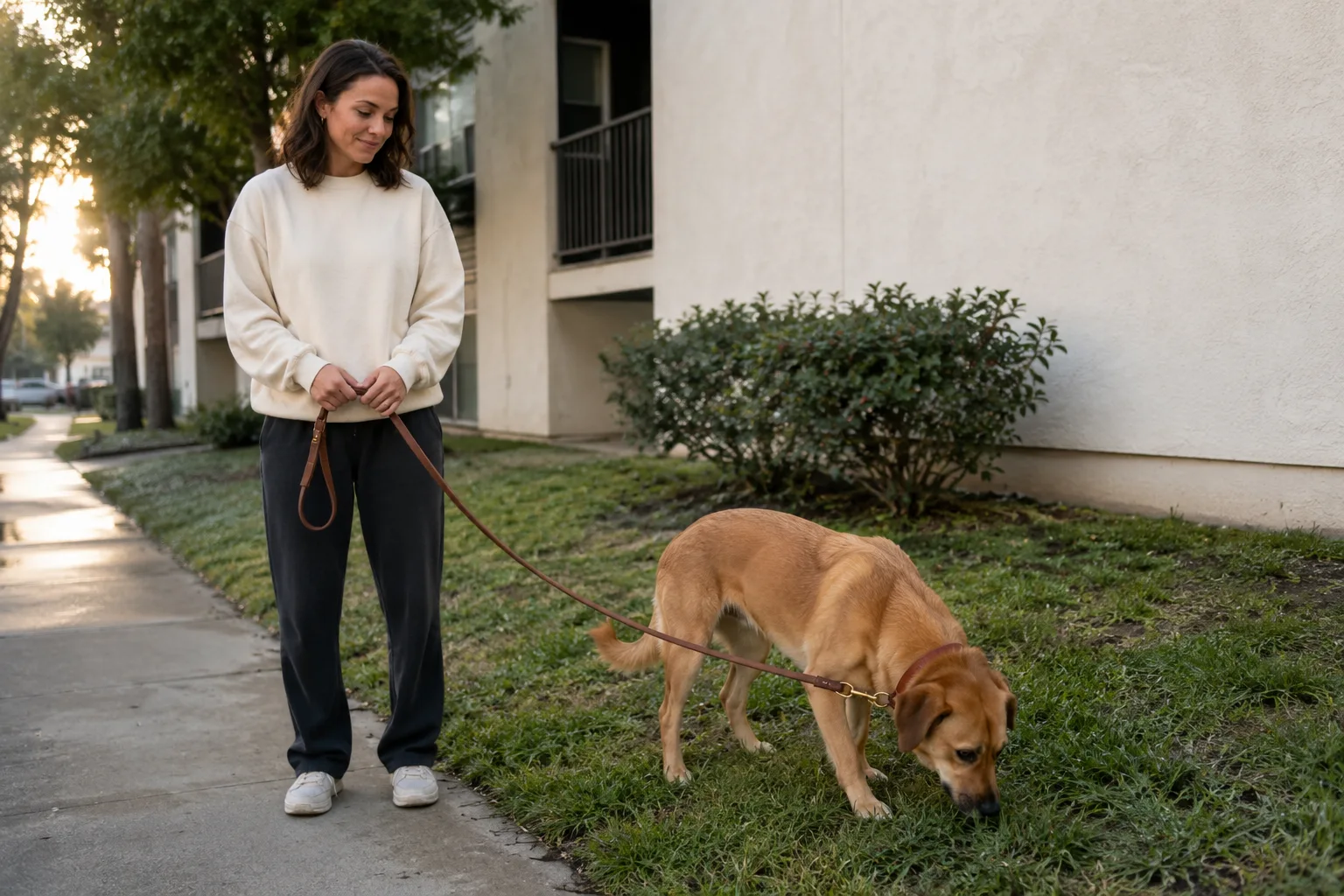
If your rescue dog won't poop outside, the first question is not whether the dog remembers housetraining. You need to determine whether your dog is eliminating somewhere else or not passing stool at all. Those situations require different responses.
A newly adopted dog may be too worried, distracted, physically uncomfortable, or unfamiliar with the available surface to eliminate outdoors. A quiet routine often helps. However, repeated indoor bowel movements point toward a housetraining or environmental problem, while producing no stool anywhere can become a medical concern.
Start by identifying which of the following paths fits your dog.
Start here: Has your dog pooped indoors, elsewhere, or nowhere?
Path 1: Your dog poops indoors
If you are finding stool in the house, your dog can pass a bowel movement. The immediate goal is to learn when and where it happens, increase appropriate outdoor opportunities, and prevent unsupervised access to preferred indoor spots.
Common patterns include:
- Pooping shortly after coming back inside
- Choosing carpet, bath mats, concrete, or another familiar surface
- Hiding behind furniture or going into an unused room
- Eliminating overnight or while people are occupied
- Urinating outside but waiting to poop indoors
This does not mean your dog is being spiteful or knowingly breaking a rule. The dog may not understand where to go in the new home, or the outdoor setting may feel too exposed or distracting.
Path 2: Your dog poops only in a particular setting
Some dogs eliminate only during a walk, on grass, on gravel, in deep cover, or when nobody is standing close. Others may have lived in a kennel, apartment, rural property, or fenced yard with a very different routine.
Treat this as useful information. For the first few days, prioritize a surface and setting the dog will use safely. Once bowel movements are regular, you can gradually build flexibility by changing one variable at a time.
Path 3: Your dog has not pooped anywhere
If you have seen no stool, verify what is known about the dog’s last bowel movement. Shelter or foster records may help, but the timing may be uncertain. Appetite changes, stress, a sudden food transition, dehydration, pain, medication, or an intestinal problem can all affect bowel movements.
Contact your veterinarian promptly if your dog is repeatedly straining without producing stool, seems painful, vomits, has a swollen or tense abdomen, refuses food, becomes unusually weak, or may have swallowed a toy, bone, fabric, trash, or another object. Do not keep extending walks in an attempt to solve possible constipation through housetraining.
Why a previously housetrained dog may struggle in a new home
Housetraining does not always transfer instantly from one home to another. Your dog has to learn a new door, schedule, yard, neighborhood, leash routine, and set of household signals.
Stress can also suppress normal elimination. Outdoors may contain traffic, barking dogs, unfamiliar people, wind, bright lights, or open spaces. A dog that scans constantly, startles at sounds, refuses food, or pulls toward home may not feel settled enough to poop.
Other practical explanations include:
- Meals are being served at different times than before
- The new food changes stool timing or consistency
- The dog is accustomed to a different potty surface
- A short, tight leash makes circling or sniffing difficult
- Cold, rain, heat, snow, or wet grass changes the dog’s behavior
- Pain or reduced mobility makes squatting uncomfortable
- Children, visitors, or another pet interrupt the dog’s privacy
- The dog has not yet learned how to signal at the new door
Senior dogs, puppies, dogs recovering from surgery, and dogs with mobility limitations may need shorter distances and more frequent opportunities. Follow any discharge or medical instructions supplied by the shelter, rescue, or veterinarian.
Build a first-week elimination log
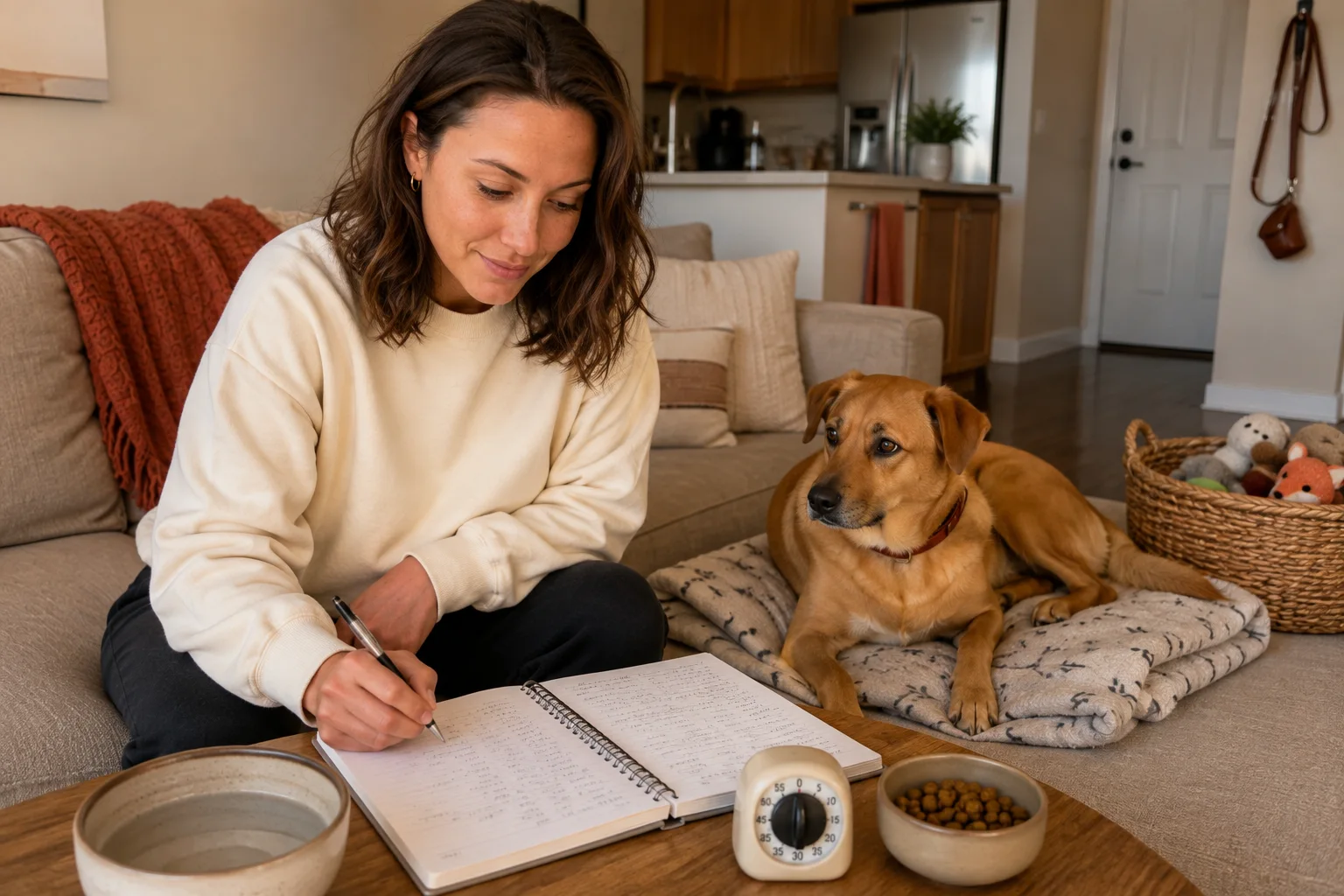
A written log is more reliable than trying to remember whether the last trip happened three hours ago or five. It can also give your veterinarian useful information if the problem continues.
Use a notebook or phone note to record:
- Meal time and approximate amount eaten
- Water intake, including unusually high or low drinking
- Urination time, location, and any straining
- Bowel movement time, location, amount, and consistency
- Potty trip start time and duration
- Exercise or play before the trip
- Accidents and the activity immediately before them
- Medication, supplements, chews, and unfamiliar foods
- Signs such as vomiting, restlessness, pain, appetite loss, or lethargy
You do not need to inspect every bowel movement obsessively. Note obvious changes such as very hard pellets, watery diarrhea, blood, black or tar-like stool, mucus, or visible foreign material. Photographing an unusual stool can help when speaking with a veterinary clinic.
Keep meals predictable unless a veterinarian has told you otherwise. Free-feeding makes elimination timing harder to identify. Do not restrict water to prevent accidents.
When your rescue dog won't poop outside, simplify the trip
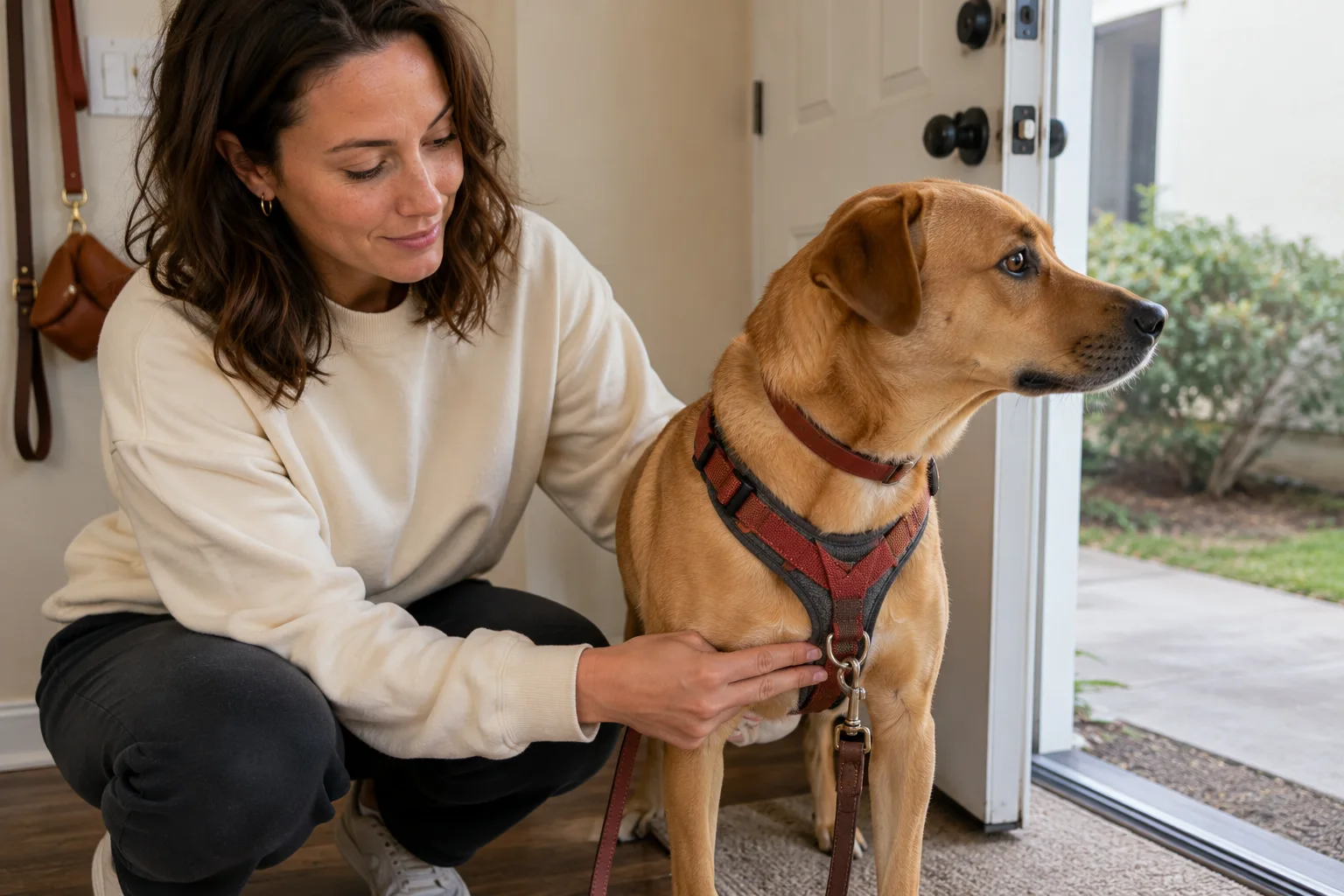
A quiet potty trip should feel predictable rather than demanding. Use the same exit and the same low-distraction area for several days if it is safe to do so.
Set up the trip
- Take your dog out on a secure leash after waking, after meals, after active play, and before bedtime.
- Walk calmly to one chosen area. Avoid greeting neighbors or turning the trip into a busy training session.
- Give enough leash slack for sniffing, circling, and choosing a position while maintaining safe control.
- Stand quietly or walk a small loop. Avoid repeating a cue every few seconds.
- Allow about 10 to 15 minutes if your dog is comfortable. End sooner if the dog is frightened, overheated, very cold, or trying urgently to return home.
- When your dog finishes, offer calm praise and a small food reward if the dog will eat. Then allow a little extra sniffing so elimination does not always make outdoor time end immediately.
A properly fitted harness can help you maintain security without placing pressure on the dog’s neck. Review this seven-point dog harness fit check before the next walk. If you need another option, compare adjustable front-clip dog harnesses using the manufacturer’s sizing chart, then check the neck, chest, and movement points after fitting.
If your dog freezes, scans continuously, or cannot take treats outdoors, the environment may be too difficult. A quieter time of day, a spot closer to the building, or a shorter trip may work better than staying outside longer.
Test one practical variable at a time
Changing everything at once makes it difficult to learn what helps. Keep the basic routine stable and test one variable over several reasonable opportunities.
Timing
Many dogs need to poop after waking, eating, or moving around. Your log may reveal a pattern such as 20 minutes after breakfast or near the end of an evening walk. Offer a trip before the usual indoor accident time.
Surface
Try the surfaces that are safely available, such as grass, mulch, gravel, or a quiet strip of soil. If your dog repeatedly uses carpet indoors, the dog may be seeking a soft, absorbent surface rather than deliberately choosing the house.
Do not trespass or ignore community rules. In an apartment complex, use designated pet areas and clean up promptly.
Privacy
Some dogs will not eliminate while a person stands over them. Turn your body slightly away, remain quiet, and provide safe leash slack. Choose a spot away from doors, groups of people, and dogs rushing fences.
Weather
Rain, snow, heat, and cold can change behavior. Use a cleared path during snow, seek shade in hot weather, and avoid unsafe pavement temperatures. A covered outdoor area may help a rain-sensitive dog if your property allows it.
Movement before stopping
A gentle five-minute walk may stimulate a bowel movement more effectively than standing in one patch. For a fearful or mobility-limited dog, a short loop may be enough. Do not add strenuous exercise when a dog seems unwell or is under activity restrictions.
What to do after an unsuccessful potty trip
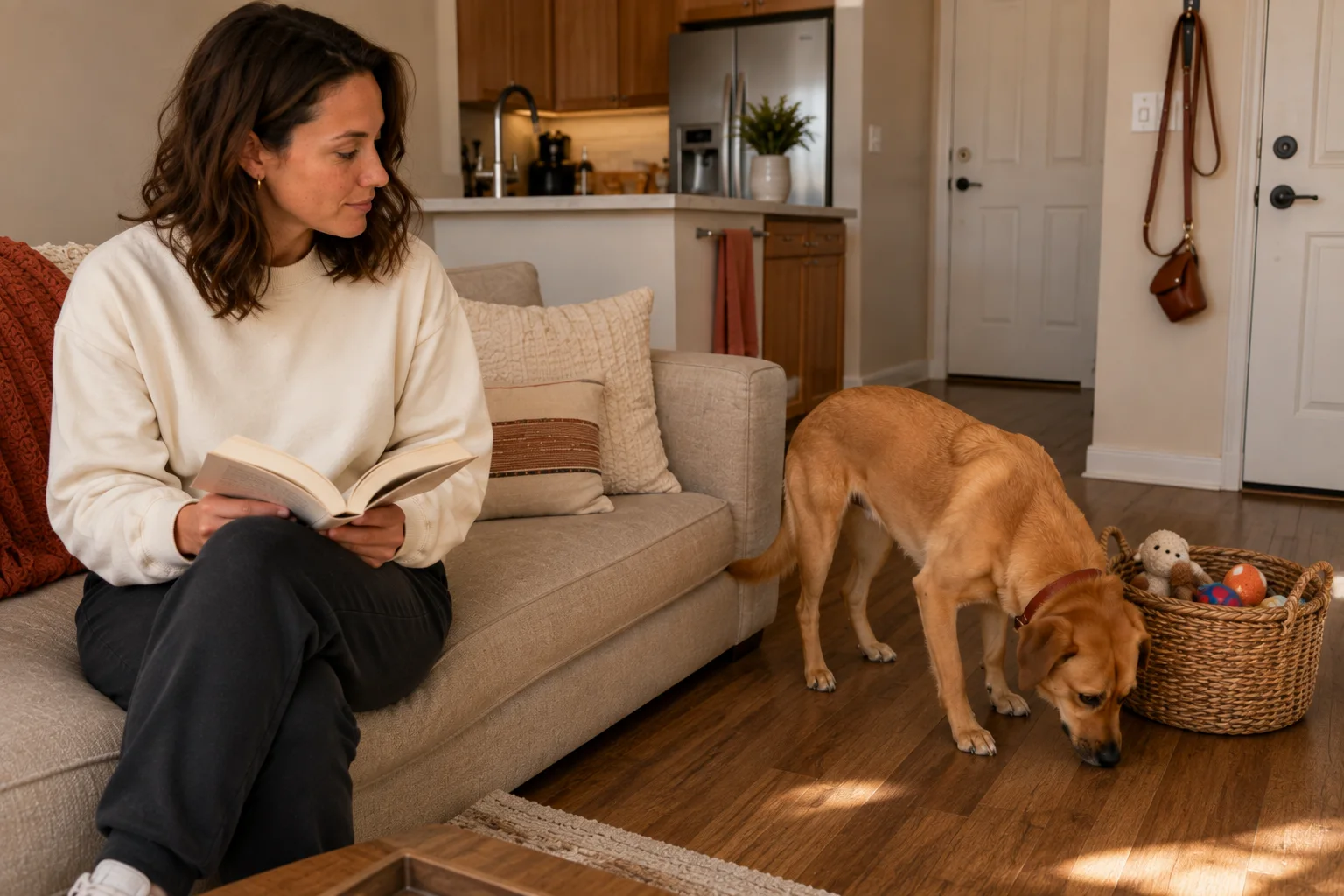
If your dog appears comfortable but does not poop, return indoors without frustration. Keep the dog near you through active supervision, a leash tether used only while attended, a gated easy-clean room, or an appropriately introduced crate if the dog is already comfortable there.
Try again in 15 to 30 minutes, particularly if your dog recently ate, woke up, or has a predictable accident pattern. Watch for sudden sniffing, circling, pacing, leaving the room, or moving toward a previously soiled area.
A crate should not be used to force a dog to hold stool for excessive periods. Some rescue dogs have a history of eliminating in confinement, panic when enclosed, or cannot comfortably wait because of age or illness. Choose supervision and management that fit the individual dog.
If you use a laundry room or another easy-clean space between trips, first dog-proof the room carefully. Detergent, dryer sheets, cords, trash, and gaps behind appliances can present hazards.
Handle indoor accidents without punishment
If you catch your dog beginning to squat, calmly guide the dog outside if you can do so without startling or grabbing. If the bowel movement is already happening, allow the dog to finish. Punishment can teach a worried dog to hide before eliminating, which makes the pattern harder to address.
Clean the area thoroughly with an enzymatic pet-odor cleaner used according to its label. Block access to repeated accident locations when practical. Roll up bath mats or small rugs temporarily if they have become preferred surfaces.
Do not rub the dog’s nose in the stool, scold after the fact, or force the dog to inspect the accident. The useful lesson happens when outdoor elimination is followed immediately by something the dog values, such as food, praise, or a few minutes of relaxed sniffing.
When to call a veterinarian instead of continuing the experiment
Because a newly adopted dog’s medical and elimination history may be incomplete, use a lower threshold for calling the clinic. A veterinary professional can tell you whether the timing and symptoms warrant an examination.
Seek prompt veterinary advice if your dog:
- Repeatedly strains but produces no stool, or produces only tiny amounts
- Vomits, retches, or cannot keep water down
- Has a swollen, firm, or painful abdomen
- Refuses food or shows a marked drop in appetite
- Becomes weak, unusually sleepy, restless, or clearly uncomfortable
- May have swallowed a foreign object, bone, trash, or toxin
- Passes black, tar-like stool or a significant amount of blood
- Has repeated watery diarrhea, especially with vomiting or lethargy
- Cries, trembles, or appears painful while attempting to squat
Call your veterinarian if an adult dog has produced no stool for roughly 48 hours, even without dramatic symptoms. Call sooner for a puppy, senior, medically vulnerable dog, or any dog whose last bowel movement is unknown and whose appetite or behavior has changed. Your veterinarian may recommend a different timeline based on health history, medications, recent surgery, and diet.
Do not give human laxatives, enemas, mineral oil, or home remedies unless a veterinarian specifically directs you. Even commonly suggested foods may be inappropriate when an obstruction or another medical condition is possible.
A realistic seven-day potty routine
The goal of the first week is not perfection. It is to establish predictability, collect information, prevent repeated accidents, and help the dog feel safe enough to eliminate.
Days 1 and 2: Stabilize the schedule
- Serve measured meals at consistent times based on the dog’s established diet and care instructions.
- Offer potty trips after waking, after meals, after active periods, and before bed.
- Use one exit and one quiet area.
- Record all urination, stool, food, water, and symptoms.
- Supervise indoors or use a safe, dog-proofed area.
- Prioritize sleep and decompression rather than a crowded social schedule.
If no stool appears anywhere, check the dog’s records and contact the rescue, foster caregiver, or veterinary clinic to establish when the dog last eliminated.
Days 3 and 4: Follow the emerging pattern
Review the log for likely bowel movement times and offer a trip shortly before them. If your dog poops indoors after returning from outside, shorten the indoor interval before trying again.
Test one variable, such as a quieter time or different surface. Keep other parts of the routine consistent. Continue rewarding outdoor success immediately.
Days 5 through 7: Build consistency gradually
If your dog is eliminating outdoors reliably, maintain the schedule rather than quickly reducing trips. Begin varying the location or route only if the dog appears relaxed and bowel movements are regular.
If accidents continue, examine the pattern. A certified professional dog trainer who uses reward-based methods can help when fear, leash behavior, or housetraining mechanics are involved. A qualified behavior professional is appropriate if the dog panics outdoors, cannot recover from environmental triggers, or shows escalating fear. Medical concerns should be addressed by a veterinarian first.
By the end of the week, you should have a clearer picture of when your dog needs to go, which setting works, and whether the problem is behavioral, environmental, or potentially medical. Some newly adopted dogs need more than a week to generalize housetraining, but worsening symptoms or absent stool should not be treated as an adjustment issue.

Join the conversation
0 comments
Leave a comment
Your email address will not be published. Comments are reviewed before appearing.